Insights
A content hub for industry trends, project insights, and in-depth case studies — prepared for a client audience.
Currently on LinkedIn
Until the first articles go live here, our LinkedIn posts keep this page current — from the company page and from Nelli’s feed.
Posts are loaded directly from LinkedIn once you give consent. A click opens the original post.
Blog & News
Latest
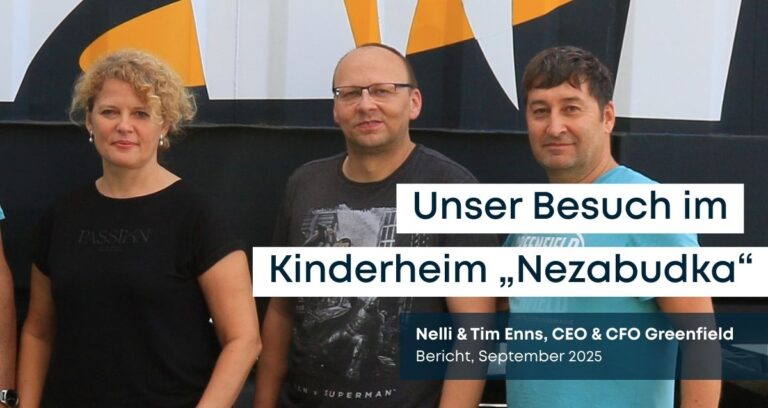
Report by Nelli and Tim Enns, September 24, 2025, Ukraine
Read more →As a company, we bear responsibility – not only economically, but also on a human level. Through our support for…
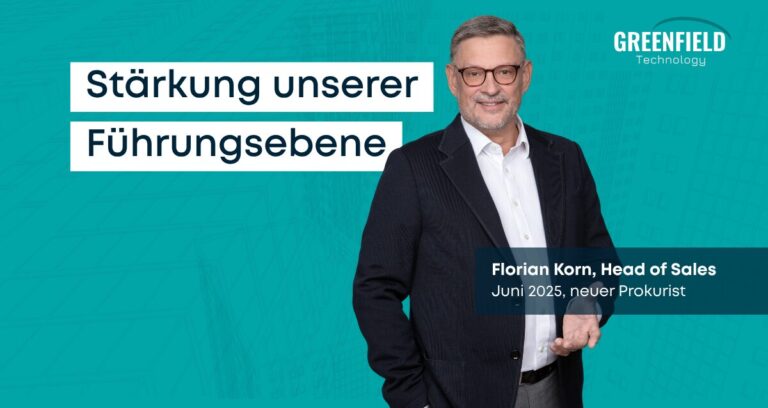
Read more →Effective June 2025, Florian Korn will be appointed as an authorized signatory (Prokurist) of Greenfield Technology AG. With this strategic…
Read more →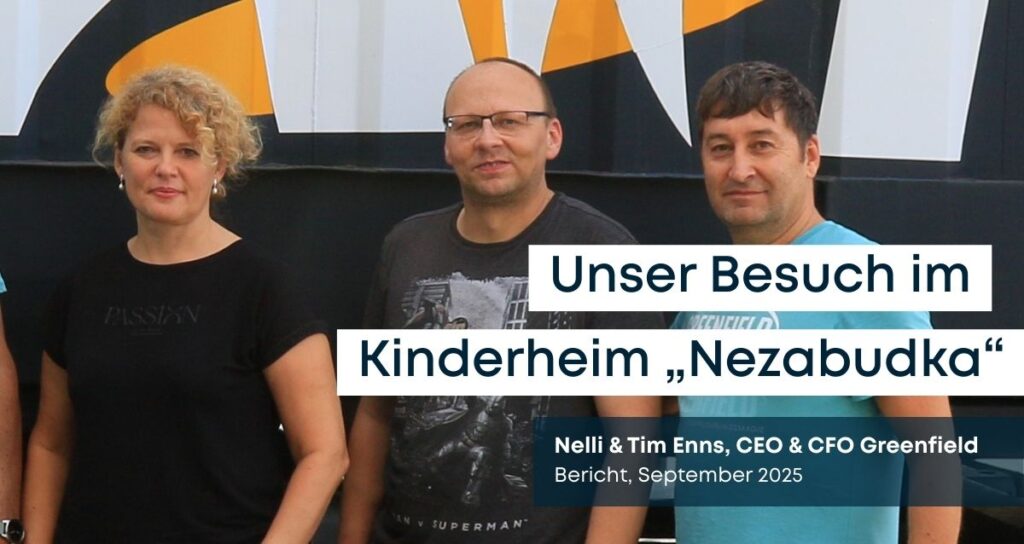
On September 22, 2025, we had the opportunity to visit the “Nezabudka” children’s home in Ukraine.
Together with our team, we wanted to see for ourselves how our aid parcels arrive and what impact they have on the ground.

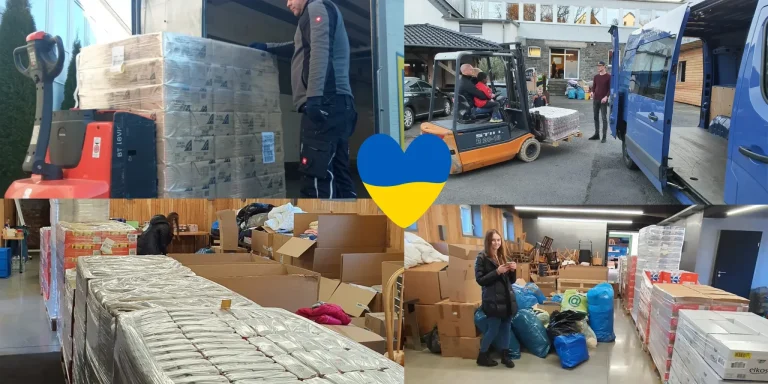
Upon arrival, we were amazed by the sheer amount of aid supplies: pallets full of baby food, incontinence products, milk, oats – and also our own parcels, which we had packed at our team event in Krakow.
It quickly became clear that “Nezabudka” is far more than just a children’s home.

In addition to caring for children, Nezabudka also supports residents of the front-line regions with food.
The organization regularly packs pallets, which are then taken to distribution centers and passed on to families in war-affected areas such as Kharkiv, Pokrovsk, and Mykolaiv. Many of the food items come from international aid programs – including GAIN, with whom we work together.
Every two weeks – as soon as new deliveries arrive – people in need at the Ivanichi location receive care packages, just like the ones we prepared in Krakow. To receive them, people present an official document from the authorities and consent to photo documentation, which in turn serves as proof for the aid organizations.
We spoke with several families – many of them refugees who were often only able to flee with a single handbag. They came from places like Toretsk, Pokrovsk, or Kharkiv, without a toothbrush, a mattress, or other everyday items.
One woman told us she has diabetes: the government pays for her insulin, but not for the test strips she needs – these eat up half her pension. Many elderly people in the village live alone, and for many, their pension isn’t even enough to cover food. Nezabudka is their only point of contact, since there is hardly any state support available.

From early afternoon onward, the house fills up with children from low-income and displaced families.
They receive a warm lunch – we were able to try it ourselves and were impressed by the excellent work of the cook.
We experienced cheerful, polite children who played soccer, laughed, and showed strong trust in Nezabudka’s staff. There’s a large playroom in the attic for rainy days.
Behind many of these children, however, lie moving stories: one girl is waiting for her father, who went missing in the war; another, only ten years old, has already taken on her mother’s household responsibilities at home, as her mother struggles with alcoholism.
Our trip showed us:
The need for help is dire. The support isn’t just used locally – it’s also passed on to other regions where the need is often even greater.
At the same time, the visit left us thoughtful:
What happens once the war eventually ends one day? How can we help people get back on their own feet for the long term, create jobs, and enable self-sufficiency?
We’ve shared some initial ideas on this with local partners – including Nils Pettkus – and we hope they will grow into new, sustainable projects.
Our trip to Nezabudka moved us deeply and showed us how important continued help remains. As long as the war continues, people will remain dependent on humanitarian support.
And beyond that, we must keep searching together for ways to create lasting prospects. We’ll keep you updated as soon as these thoughts turn into concrete plans – because every contribution counts.
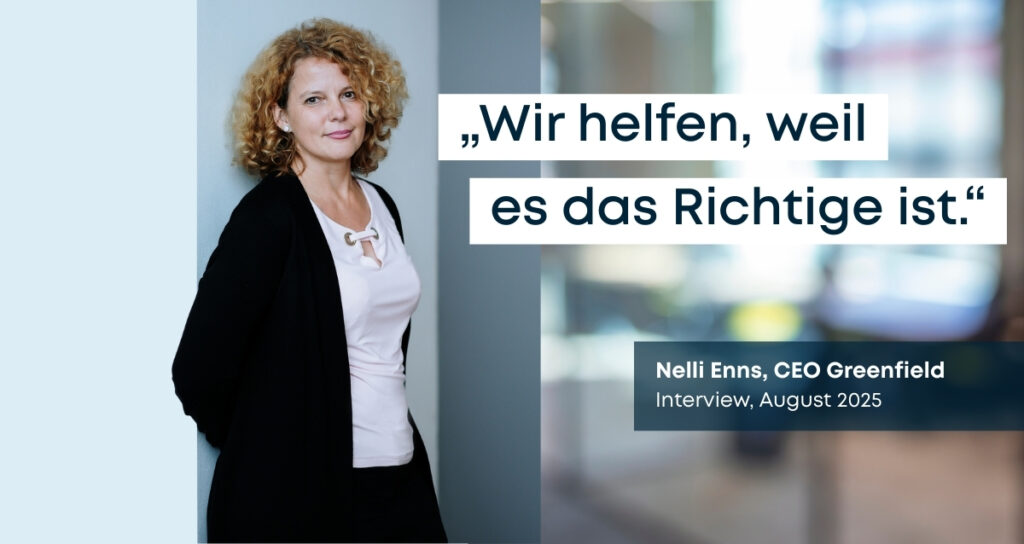
As an IT company in Europe, we thrive on openness, exchange, and freedom.
The war in Ukraine shakes these very values to their core – and hits people hard.
For us, helping is more than an obligation: it is a deep personal conviction.
We spoke with our management team about why supporting Ukraine is especially close to their hearts.
Hi Nelli, we’ve been supporting the GAiN Group’s aid initiatives for Ukraine for quite some time now. In September, in addition to financial support, we also want to get hands-on and pack boxes ourselves. Why is this cause so important to Greenfield’s board?
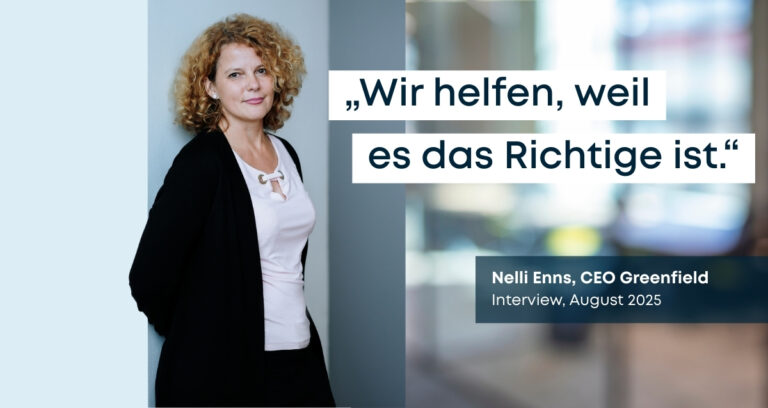
All three members of Greenfield’s board agree on one thing – we cannot look away. It’s easy to feel overwhelmed by the many crises in the world – which is exactly why it’s so important to help in concrete ways. This initiative is tangible, meaningful, and direct: we can make a difference – with every tube of toothpaste, every bag of rice, every children’s jacket and pair of shoes, every small gesture of humanity.
We are relatively fortunate here, and that’s precisely why we have a responsibility to stand by those who need protection and help. We may not be able to change the course of the war, but we can make individual people’s lives a little brighter. Children in particular suffer under this unimaginable hardship – they are the most vulnerable and need all the support they can get. For me, this is a deeply personal concern.
Many companies tend to hold back when it comes to addressing social or political crises. Why does Greenfield choose to take a clear stance?
Why others do or don’t do something isn’t important to us. What matters is the attitude we hold as Greenfield. We believe that companies carry a social responsibility – not only for economic performance, but also to remain open to the needs of the vulnerable and to social issues. We want to make a difference and help where the need in Europe is greatest – and right now, that is Ukraine, practically on our doorstep.
“Stand with Ukraine” protests around the world.
That’s wonderful! What exactly will we be doing as part of the GAiN initiative?
Together, we’re packing aid parcels with everyday essentials – for people in Ukraine who have lost everything because of the war. Our team is taking part voluntarily: it’s a collective effort – and that’s what makes it so special.
What does this effort mean to you – especially with regard to our team and the people directly affected?
I’m proud to see how many colleagues are taking part – not because they have to, but because they want to. This commitment shows what a great team we are. Solidarity isn’t created through words, but through actions – and that’s exactly what we live here. What moves me most is that we have employees from all across Europe – including from Ukraine. With this initiative, we want to show them that we see their experiences and that we stand by them, no matter where they are.
Will social engagement continue to play a role for us in the future?
Absolutely: yes. Sustainable action – both economically and on a human level – is part of our corporate DNA. We don’t see this initiative as an exception, but as part of the actions we plan for the long term and strategically.
The Motherland Monument in the Ukrainian capital, Kyiv
When you think of the people who receive these parcels – what do you wish for them?
Above all, I wish them one thing: hope. These parcels may be small, but they are a sign: “You are not forgotten.” Especially for those who live with the consequences of the war every day – and that includes our Ukrainian colleagues – a sign like this can give real strength. It’s our way of saying: we stand by your side, you are not alone.
What would you like to say to other companies or partners who might still be hesitant to get involved?
Just do it. You’ll see how much empathy, responsibility, and community grow out of an initiative like this. It’s not about grand gestures, but about honest help. And that often starts with a simple decision: “I’m in.”
Thank you for this conversation – and for your clear stance.
Thank you to all the colleagues who are taking part!
As a company, we bear responsibility – not only economically, but also on a human level. With our support for Ukraine, we show that solidarity is built not through words, but through actions. – Here you can learn more about our company culture.
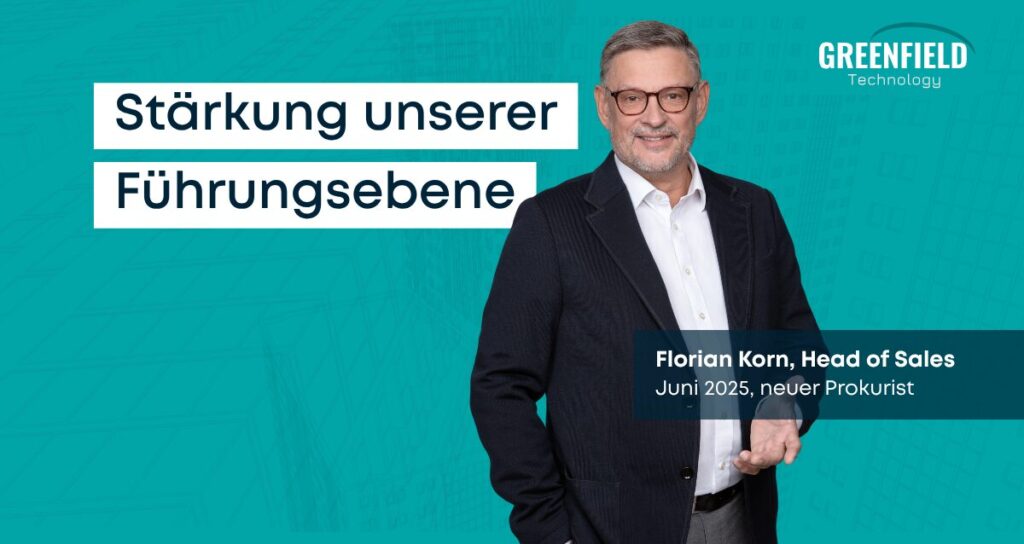
Effective June 2025, Florian Korn will be appointed as an authorized signatory (Prokurist) of Greenfield Technology AG. With this strategic expansion of the management structure, the company is laying the groundwork for further sustainable growth and strengthening its leadership base for the years ahead.
Greenfield Technology AG was founded in 2018 with the goal of giving companies access to digital innovation through modern low-code platforms. What began with a clear vision and a small founding team has, within just a few years, grown into an established provider in the German-speaking region – today employing around 70 people with an increasingly international focus. The company’s headquarters are located in Düsseldorf, alongside a location in Poland.
The management team of the owner-led Greenfield Technology AG currently consists of Nelli Enns (CEO), Tim Enns (CFO), and Lars Ackermann (CTO). This leadership team is now joined by Florian Korn for the Sales division. Florian brings more than 30 years of experience in program and project management, particularly in the public sector and other industries. As Head of Sales, he strengthens our company with sound leadership experience and customer expertise.
With the appointment of Florian Korn as authorized signatory, the company honors his continuous and responsible work in a leadership role.
“Florian has proven over the past few years that he not only masters complex challenges, but also inspires and motivates others along the way. From technical project leadership to direct client contact, he brings fresh ideas and pragmatic solutions everywhere he goes. With this authorization, we are granting him the authority that matches the real influence he already has on our company. Florian already plays a major role today in shaping how Greenfield evolves.“
With the granting of this authorization, Greenfield Technology AG aims to sustainably strengthen decision-making processes in Sales as well, and to continue positioning the company for the future. We look forward to taking this next step together with Florian Korn and consistently continuing the development of our company.
Imagine being able to build complex software applications without getting lost in endless lines of code. Sounds like something out of the future? It isn’t! Welcome to the world of low-code – an approach that is revolutionizing software development and enabling us at Greenfield to deliver tailor-made solutions for our clients in record time.
Curious? In our exclusive handout, you’ll find even more insider knowledge and concrete best practices to guide you toward the next level of software development.

“Low-code platforms like Pega Infinity, which we use at Greenfield for our projects, are essentially highly sophisticated toolkits. They provide a visual development environment in which applications are built by configuring and assembling predefined building blocks – similar to building with Lego®. Instead of programming every function from scratch, developers and business experts can focus on the ‘what’ and ‘why’ of an application. The platform handles the ‘how’ – automated, efficient, and resistant to errors.”

– Lars Ackermann
The visual nature of low-code fosters collaboration between IT and the business. Business departments see their ideas implemented “live,” iterations are easy to make, and the result is an application that optimally combines both business logic and technical feasibility.
A particular highlight is Pega Blueprint. With this tool, you can design your application ideas – from a parking app to room booking – directly online, share them with colleagues, and import them into the Pega platform. This saves time and delivers a nearly finished application structure as a starting point. Whether it’s pool vehicle management or a service portal – with Pega Blueprint, your ideas get a solid foundation right from the start.
In our exclusive handout, we dive even deeper into the topic and show concrete best practices for your successful low-code journey. Take a look and secure the knowledge for the next level of software development!
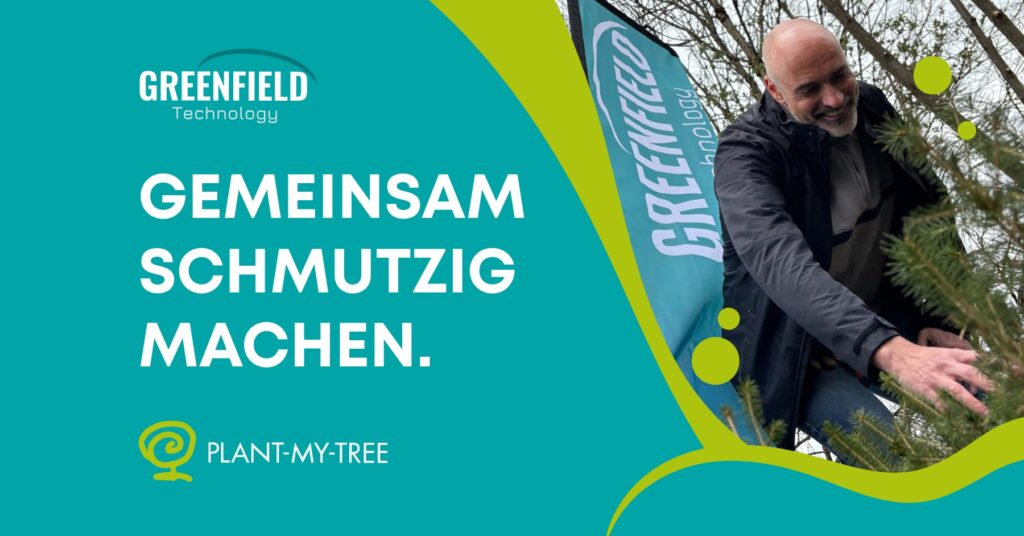
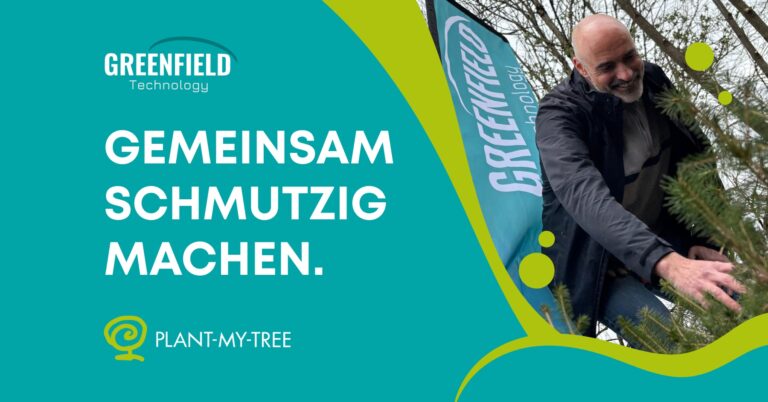
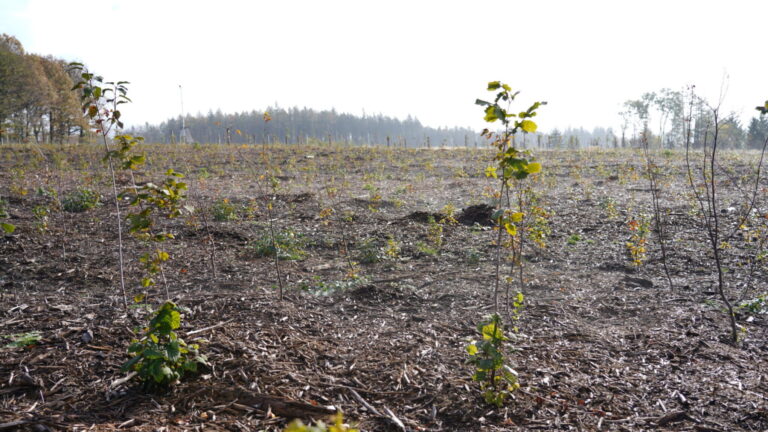
On April 10, many members of the Greenfield team were on site in Lüdenscheid – together with PLANT-MY-TREE®, new trees were planted. An effort for the environment and a great team experience on top.
With full energy and great spirits, we got down to business: we laughed, we dug, and we moved a whole lot of soil. It was impressive to watch an open field gradually turn into a small patch of forest. For us, it was a valuable experience to encounter nature up close while actively contributing to climate protection.

The forests around Lüdenscheid are under pressure. Spruce trees in particular have suffered from prolonged drought and bark beetle infestation. Millions of trees are affected across Germany – in 2022 alone, around 500,000 hectares of forest fell victim to climate-related damage and had to be felled. PLANT-MY-TREE® addresses this by planting climate-resilient tree species such as oak, hornbeam, and sweet chestnut, making the forest more resilient in the long term.
For us, the initiative was not just work, but a genuine shared experience. From the very first spade in the ground to the last oak tree planted, we worked together. A reminder of how much can be achieved as a team. After the planting, we rounded off the day with a relaxed get-together.


Climate protection is not a task that can be left to governments alone – companies, too, bear a clear responsibility to act. At Greenfield, we are aware of this, and we turn that awareness into action. With our PlantMyTree project, we make a genuine contribution to CO₂ offsetting by specifically reforesting climate-resilient mixed forests that not only bind CO₂ but also promote biodiversity.
We already planted trees together in Lüdenscheid last year. But our commitment doesn’t end with a one-off initiative and the planting of young trees: we stay engaged to make sure our investment in climate protection bears fruit in the long run.
We are also convinced that sustainable action is more than just a duty – it creates meaning and cohesion. Our employees experience firsthand how their work has a direct, positive impact on the environment and society. For today, and for generations to come.
PLANT-MY-TREE® has been committed to sustainable climate protection in Germany since 2007. With more than a million trees planted, the organization focuses on climate-resilient mixed forests that can better withstand climate change and promote biodiversity. Founded by Sören Brüntgens, a dedicated team creates stable, long-lasting forests across more than 110 reforestation sites in Germany.
But PLANT-MY-TREE® goes beyond simply planting trees: regular upkeep, protection against pests, and the selection of resilient tree species all help secure long-term success. Companies and private individuals can get actively involved through partnerships and become part of the climate protection movement themselves. Thanks to its regional focus, Germany’s forests benefit directly, and short distances ensure positive climate effects on the ground.

Generative AI is revolutionizing the digital landscape by opening up new possibilities in automation, customer communication, and data-driven decision-making for companies and government agencies. However, it also brings challenges – ranging from data protection risks to model manipulation and disinformation.
How can industry and government agencies use generative AI to drive innovation while minimizing security risks? In this article, we analyze the key findings from the current whitepaper by the German Federal Office for Information Security (BSI) and use an example to show which measures enable safe and responsible use.
Artificial intelligence offers enormous advantages – from automation and increased efficiency to personalized customer interaction. But it also provides valuable support in the area of IT security: AI helps with security management, by analyzing threat scenarios and reviewing system configurations. It detects unwanted content, even when clever disguising allows it to bypass classic spam filters. In addition, AI can examine data traffic for anomalies or optimize and secure program code.
However, these opportunities also come with risks. Large Language Models (LLMs) can generate misinformation (“hallucinations”) when prompted incorrectly, since they do not reason but instead provide statistically based answers. Likewise, deliberately manipulated prompts can be used to extract confidential information or capture internal knowledge.
To counteract these risks or minimize their impact, the Federal Office for Information Security (BSI) has created a comprehensive list of measures. An accompanying matrix specifically maps the measures to the respective risks, allowing IT managers to quickly identify which threats are relevant to their own system – and which strategies can effectively counter them.

The BSI warns of the danger of impersonating a media identity. Here, attackers use artificial intelligence to build trust through human manipulation techniques or psychological influence aimed at extracting information (social engineering), and to get people to disclose sensitive data or carry out security-critical actions – for example, through deceptively genuine chats, emails, or other communication channels.

“As experts in low-code development with the Pega platform and innovative AI technologies, we know that the use of generative AI must be well thought out – especially in regulated industries. We recommend that our customers rely on powerful European AI providers, as these come closest to meeting the desired security and data protection requirements. In addition, the business logic remains entirely within the application through lean integration, while the AI efficiently selects, prepares, and summarizes data.
Our approach helps customers identify and analyze potential bias. Control over the models used always remains in the hands of the user – we provide support with practical solution approaches and well-founded advice. In doing so, we rely on close collaboration in which the customer, as the driving force, sets the direction while we optimally design the technical implementation.
With our in-depth PEGA expertise, we seamlessly connect AI with new and existing applications. This enables automated workflows, data-driven decisions, and more efficient customer communication. Our strategic consulting ensures a sustainable balance between innovation and control, so that our customers’ processes remain secure, high-performing, and future-proof.“
Generative AI cannot be viewed in isolation. The BSI emphasizes the need for a robust infrastructure, continuous model monitoring, and clearly defined access rights and governance policies. Only through precise control and regular evaluation can it be ensured that AI applications operate safely and reliably.
We rely on vetted model architectures that enable transparent and effective use of artificial intelligence. The AI systems used are designed to comply with the requirements of the General Data Protection Regulation (GDPR), while modern security measures are implemented to ensure the integrity of the processed data.
In addition, the Pega low-code platform for decisioning and case management offers a powerful foundation for governing AI-supported business processes. Its flexible architecture enables precise adaptation to individual requirements and ensures that companies benefit from the advantages of artificial intelligence without having to compromise on security or data protection.
You can download the complete BSI whitepaper here.
Would you like to learn more about Greenfield?
Here you can find more information about our digital services.
Also follow us on LinkedIn to stay up to date on the latest industry news, Pega updates, and career opportunities.
Are you ready for the next step? Then let’s shape your transformation together.
Low-code platforms have long established themselves as a fixed component for driving digital transformations efficiently and sustainably. According to forecasts, the global market for low-code development will reach a size of more than $388 billion by 2030, with an impressive annual growth rate (CAGR) of 37.9% (Business Wire, 2024).
Pega, as one of the world’s leading low-code platforms, remains not only a pioneer but also a driving force for innovation. From automating complex processes to integrating intelligent workflows – the Pega platform offers companies and public institutions versatile approaches for responding to growing demands.
In particular, the public sector, banks, and insurance companies are increasingly recognizing the possibilities that low-code solutions offer: greater agility, faster rollout of new applications, and the ability to adapt flexibly to regulatory changes. But what comes next – which trends, technologies, and challenges will shape the low-code market and other industries?
Our experts have taken these questions as an opportunity to venture a look into the future. Their assessments show how low-code could revolutionize the way companies work in the long term as well.
For us, he sheds light on upcoming challenges for digital transformation in 2025 and how Pega solutions can help:

“2025 will be a year of major challenges, both in terms of selecting suitable new technologies and their investment calculations. Many companies have recently taken a responsible approach to adopting low-code tools, because they have come to appreciate the benefits of flexible automation workflows over standard solutions.
However, only a few low-code tools additionally focus on the topic of reusability. With our Pega solutions, entire organizations can be mapped very intelligently using reusable building blocks – and changed quickly! This, however, will be of decisive advantage in 2025: new laws, tariffs, funding programs, rapidly changing markets – companies need to be able to react immediately. Those who already use Pega will greatly appreciate the value of this investment. They can adapt their organization without major release cycles. On top of that, Pega continues to invest heavily in integrating artificial intelligence and can already take a great deal of work off its customers’ hands today.”
How do institutions best respond t

o rising costs, and what role does digitalization play in this? Kathrin explores this topic for us:
“The growing cost pressure in public administration can, in the medium term, only be addressed through greater efficiency gained from digitalizing processes. The key is to focus on synergies, reusability, sustainability, and close collaboration with other authorities and organizations. Digitalization initiatives implemented with the Pega low-code platform can deliver exactly that. Pega makes it possible to develop tailor-made and scalable solutions that automate processes, seamlessly integrate existing systems, and at the same time foster collaboration between organizations – all with a clear focus on efficiency and sustainability.”
Low-code has long been more than just a trend – it is a central building block of digital transformation. With Pega, companies and institutions have a platform at their side that not only masters today’s challenges but also sets the course for tomorrow. Whether public administration, banks, or insurance companies – the future belongs to those who rely on intelligent, scalable, and sustainable solutions. Greenfield is the leading German-speaking Pega partner and a guide for digital projects. Together with you, we shape your digital processes and rely on innovative solutions that combine efficiency, flexibility, and sustainability. With our expertise, we support you from conception through implementation and beyond. In doing so, we create tailor-made systems that make companies and public institutions future-proof.
Would you like to learn more about Greenfield?
Here you can find more information about our digital services.
Also follow us on LinkedIn to stay up to date on the latest industry news, Pega updates, and career opportunities.
Are you ready for the next step? Then let’s shape your transformation together.
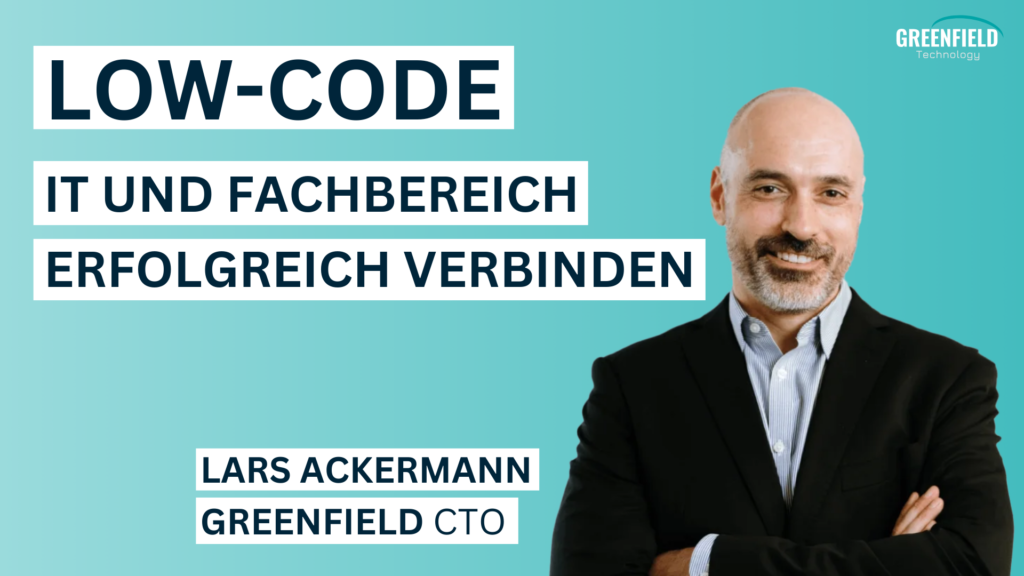
This headline caused quite a stir in a recently published article on the IT news platform Heise (see Golo Roden, December 4, 2024). But where does low-code technology actually stand today, and where do its opportunities and limitations lie? In the following article, we offer a well-founded and balanced perspective on low-code technology and answer open questions.
The author of the Heise article puts it aptly: “Business departments cannot suddenly solve everything themselves as if by magic.” We fully agree with this observation. A calculator doesn’t turn anyone into a mathematician – and in the same way, a low-code platform doesn’t turn a subject-matter expert into a fully-fledged software developer.
Not all low-code platforms are the same. While many providers have only jumped on the low-code trend in recent years, the Pega platform was designed as a low-code system from the very beginning – 40 years ago – and Pegasystems continues to develop its platform further. This long experience is reflected particularly in its technical maturity:
Do you have further questions on this or other low-code-related topics? Then feel free to send us a message and follow us on LinkedIn so you never miss any news about Greenfield or the most important developments in the low-code world.
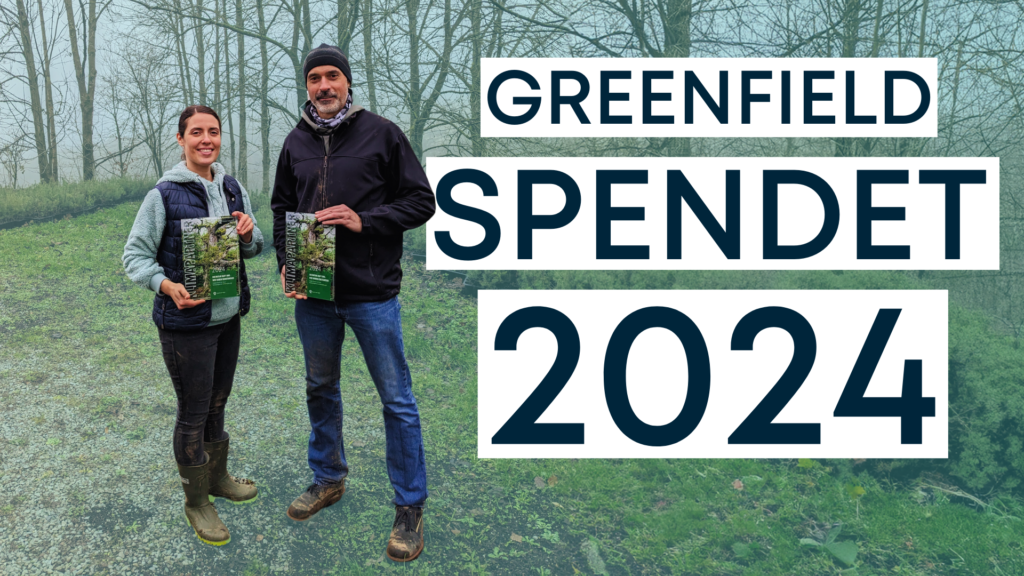
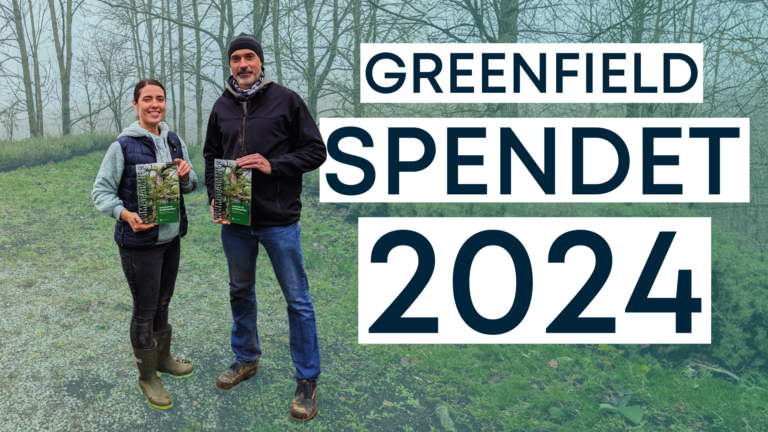
2024 was a year full of successes, milestones, and important initiatives for Greenfield. We overcame numerous challenges and developed innovative solutions for our customers. It was a year in which we, as a company, broke new ground and were able to take important steps for our future. Giving back some of our success has always been a strong commitment of ours. The entire Greenfield team is therefore delighted that, in 2024 too, we were able to provide more than 50,000 euros for charitable purposes. As every year, we specifically supported organizations that make a decisive difference in areas such as humanitarian aid, education, and environmental protection. In the following article, we would like to present our donation goals in detail and take a closer look at the organizations we supported.
In 2024, the war in Ukraine remained one of the dominant global issues. Millions of people have been displaced by the ongoing conflict and are in urgent need of help. Families, and especially children, are particularly affected, having to live in insecure and often dangerous conditions without the support they need.
We therefore decided in 2024 to support the organization GAiN e.V. with a donation of 37,800 euros. For more than 30 years, the organization has been providing on-the-ground emergency relief in crisis regions worldwide and is committed to long-term projects for a better future. With our contribution, we aim to support a GAiN relief convoy heading to a crisis region in Ukraine.

Climate change is one of the greatest challenges of our time, and each of us is called upon to take action. Greenfield already supported PLANT-MY-TREE in 2023 in reforesting and protecting German natural areas. We continued this commitment in 2024 with a donation of 5,000 euros. In addition, some of our Greenfield employees actively got involved toward the end of the year by taking part in a tree-planting campaign near Lüdenscheid. You can find more information about this here.
PLANT-MY-TREE has made it its mission to counteract forest dieback in Germany. The foundation is committed to preserving natural areas and planting new trees. Through its work, the preservation of more than 1,000,000 trees is already being secured today.

Education is the key to a better future. In 2024, Greenfield decided to invest in the next generation of leaders and innovators together with the University of Jena as part of the Deutschlandstipendium (Germany Scholarship) program. With a donation of 7,200 euros, we helped support talented students and pave their way toward a successful future.
The Deutschlandstipendium is a government-supported program that focuses on supporting particularly high-achieving and committed students. Through the scholarship, students receive monthly financial support that allows them to focus on their studies without financial worries. This support helps not only the students themselves but also society as a whole, as it enables an education that improves opportunities in both the job market and research.
We are proud that 2024 was once again a year of commitment for Greenfield. As in previous years, we placed great importance not only on providing financial resources, but above all on taking responsibility to make a positive contribution to our society. In doing so, we continue to rely on close, fully transparent, and long-term partnerships with our donation partners.
“Through our donations to GAiN and PLANT-MY-TREE, and our commitment to students at the University of Jena, we became active in 2024 in three very different yet equally important areas. In doing so, Greenfield continues the social responsibility it has upheld since its founding. We are already looking forward to reports and updates from our donation partners.”
Lars Ackermann, Chief Technology Officer
Do you have questions? Just get in touch with us! Also follow us on LinkedIn to stay up to date on everything related to Greenfield and new career opportunities.
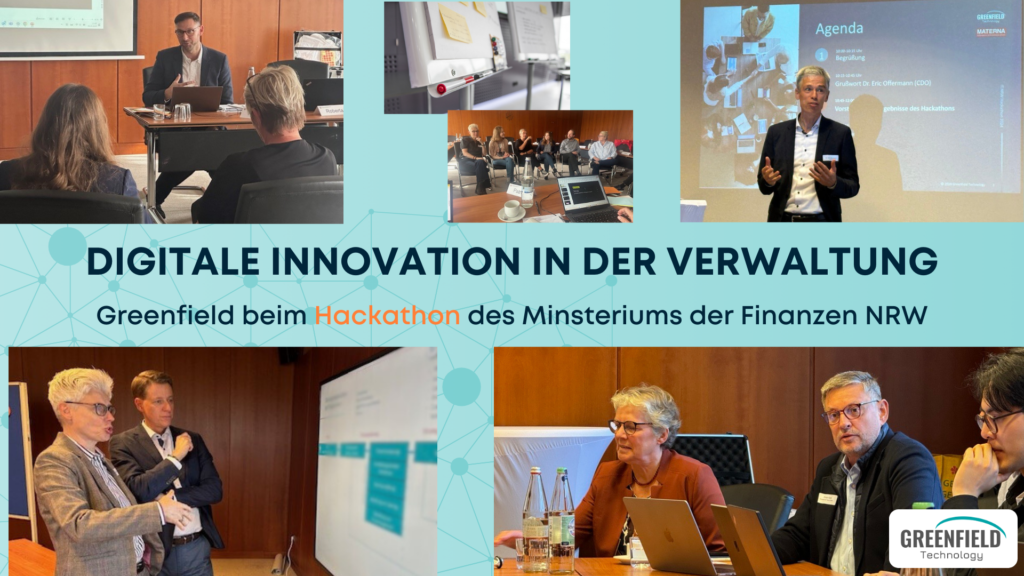
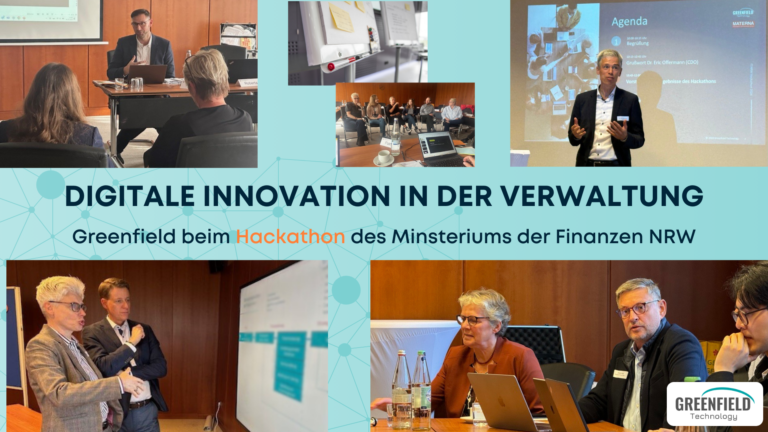
Public administration is undergoing change in North Rhine-Westphalia as well: digitalization offers many suitable solutions for making processes more efficient, flexible, and user-friendly. To actively help shape this transformation, the Ministry of Finance recently organized a hackathon in which our Greenfield team, together with Materna, was able to showcase the potential of low-code technologies — and Pega solutions in particular — for modern public administration. For four weeks, we worked in close coordination with the Ministry’s staff to develop practical prototypes. The fascinating insights gained and the positive response from everyone involved give hope for a forward-looking, user-oriented administration!
Greenfield CEO Nelli Enns was there in person: “The hackathon impressively demonstrated how innovative technologies and committed collaboration can fundamentally modernize public administration. Our goal is to give authorities the tools they need to act more efficiently and closer to citizens.”

Core processes in public administration are often complex and involve labor-intensive, manual tasks. This not only leads to delays but also places a considerable strain on staff resources. The hackathon aimed to develop innovative low-code solutions in collaboration with the Ministry’s employees that would ease such processes and support the path toward a modern, digital administration.
Two representative administrative processes were selected as prototypes for the hackathon. Both applications demonstrated how low-code and Pega can increase efficiency, reduce redundancy, and relieve the burden on staff. The focus here was not only on the technical solution, but also on directly involving the future users, in order to take their actual needs and expectations into account. This strengthened understanding of digital solutions and generated enthusiasm among participants. More on this below!
One of the biggest advantages of the Pega platform is the ability to build and adapt applications in record time. This was impressively demonstrated at the hackathon: prototypes emerged within just a few days that simplified complex tasks and inspired participants to think further about the potential of a digitalized administration. Over the course of the hackathon, the team developed a solution that automates manual, time-consuming activities. The participating employees experienced firsthand how tasks could be automatically assigned to the responsible roles and how data could be maintained without redundancy. This automation frees employees from routine tasks and allows them to focus more on strategic work. A key aspect of the prototypes was also the user-friendly design made possible by the Pega software we implemented.
Gerlinde van Holt, Project Manager at the NRW Ministry of Finance, said of the hackathon: “The hackathon gave employees from all departments of our ministry the opportunity to actively contribute to the creation of a low-code application as part of an agile approach. Everyone who embarked on this journey took part with full enthusiasm and dedication!”
The collaboration during the hackathon also showed how important it is to incorporate user needs into development from the very beginning. Feedback from the future users was consistently positive and highlighted the benefits of the prototypes. It was particularly appreciated that our Pega solution fully automated repetitive steps in the process flow and enabled continuous status tracking. Participants saw the time savings and increased efficiency as decisive advantages for managing their daily tasks more effectively.
Another important insight was the added value of a central overview of tasks and requests, which was integrated into the prototypes. The ability to manage all data in a structured and centralized way was very well received and showed how digital support can help administration organize itself more efficiently.

“The colleagues from Greenfield and Materna understood at every stage how to take on board our wishes and ideas and translate them into technology. During the three sessions in which we jointly worked out the foundations for the development, an open and positive atmosphere prevailed in which everyone felt included.”
– Gerlinde van Holt, Project Manager at the NRW Ministry of Finance
The hackathon once again made clear that digitalizing administration is about far more than simply deploying new technologies. It is about genuinely and sustainably improving processes and providing real support to the people behind the tasks. User-oriented digitalization that puts employees’ needs at the center can make workflows more efficient and sustainably improve the quality of administration. Low-code offers a flexible, adaptable solution that can be quickly tailored to specific requirements. This makes the technology ideal for the public sector, where every administrative body faces different processes and challenges. The combination of agility and flexibility that Pega offers makes it possible to develop tailor-made applications that both increase efficiency and boost user satisfaction.
The hackathon was an outstanding example of how low-code platforms can support the transformation of the public sector. It not only showed participants the possibilities of the technology, but also demonstrated how close collaboration and an agile approach can create user-friendly solutions that make administrative work easier. The enthusiasm and commitment of everyone involved are a strong sign that the path is now clear for forward-looking digitalization in public administration.
Patrick Förster, Lead Business Architect at Greenfield, thanks the entire Ministry team: “A huge thank you goes to the Ministry of Finance for the excellent collaboration and the trust placed in our ideas. The hackathon has once again shown how low-code and Pega can shape the future of public administration — flexible, efficient, and precisely tailored to the challenges of the public sector.”
|

|
We look forward to continuing to support public administration on its digital journey and are happy to offer you a personal consultation. Find out here more about our work. Contact us here or submit your no-obligation inquiry.


For the upcoming Pega event in Munich, Greenfield Technology and T-Systems, as sponsors of the event, invite you to take an exciting look into the future of digitalization. The “Low-Code Kitchen” promises to make the potential of low-code software tangible, live and in person. It shows how administrative services and specialist procedures can be digitalized and automated in no time at all. In conversation with Markus, we find out what awaits participants and how they themselves can become part of this digitalization.
| Markus, thank you so much for taking the time. In the “Low-Code Kitchen,” you’re giving an insight into how low-code technologies and artificial intelligence are shaping the future of administrative digitalization. What can participants expect from the demo show?
Markus Naaf: “My pleasure! The Low-Code Kitchen is a kind of interactive platform that puts the principles of co-creation and low-code front and center. Our demo is designed so participants can experience firsthand just how quickly and efficiently administrative services can be built using T-Systems’ Public Toolkit in combination with the Greenfield Components. With the help of generative AI (GenAI), we show how applications are built from the ground up in near real time, and how colleagues without an IT background — in other words, citizen developers — can actively help shape the solutions. |

That sounds exciting! What’s the goal of your Low Code Kitchen?
Markus: “Our main goal is to show how collaboration between business and IT departments can work successfully — in other words, genuine co-creation in digitalization. In the demo, participants see how, thanks to low-code technology and an intuitive development environment, they can independently help shape many steps of application development. Especially in the public administration sector, this is a game changer: instead of relying on extensive programming knowledge, employees from various departments can contribute their specialist expertise directly. This not only leads to faster results but also increases acceptance of, and improves the fit of, the new digital solutions.”

The combination of low-code and GenAI really does sound innovative. Can you give an example of what this combination looks like in practice?
Markus: “Absolutely. Let’s say a specialist application for an application procedure is being modernized — in other words, an administrative solution that’s directly connected to, among other things, a citizen portal where citizens can submit applications, upload supporting documents, or ask follow-up questions. Thanks to the Pega low-code platform that we implement for our clients, combined with GenAI-powered tools, business departments can create their own modules without deep programming knowledge while precisely defining all requirements. Artificial intelligence provides additional support here: it suggests optimizations, automatically adjusts workflows, and ensures that the application process becomes simpler and faster for users. This way, we deliver a finished product in a short time that can be fully integrated into the existing infrastructure.”
How do you involve participants in your demo? Will they be able to get hands-on themselves?
Markus: “That’s exactly the plan! We want participants to live *taste and try* digitalization, as we like to say. Through short interactive segments, they can try out the platform themselves and see how easy it is to turn their own ideas into concrete solutions. They’ll experience how intuitive development steps are designed, and what role GenAI — or specifically EU-GDPR-compliant LLMs (Large Language Models) — plays in automating repetitive tasks and providing intelligent recommendations. We’re supported in this by colleagues from T-Systems, who likewise bring a great deal of experience in working with the Pega platform and, together with us, ensure that the technical implementation goes smoothly.”
“In the Low-Code Kitchen, we combine expertise with speed to develop digital solutions quickly and precisely — ensuring higher quality and greater acceptance.”

The Low Code Kitchen will be an exciting, hands-on demo show that lets you experience the added value of digitalization firsthand! Markus Naaf and his team from Greenfield Technology, together with experts from T-Systems, invite you to help shape the digital future live. Visit the Low Code Kitchen at the Pega Community Forum 2024, November 12–13 in Munich, and experience how digitalization really works.


Internationally recognized certifications such as the Pega Government Specialization play a key role for us. They confirm our competence, our commitment, and that we are experts at developing tailor-made solutions for our clients that address industry-specific challenges. For you, this means that you can rely on our expertise and on our solutions being perfectly tailored to your needs.

Florian: It’s a real milestone for us. The “Pega Specialized Partner” designation in the Government sector confirms our expertise in the public sector and shows that we at Greenfield truly understand our clients. Of course, the dedication of our employees should not go unmentioned here. For me personally, this recognition shows that the value proposition we offer is matched by what we deliver at the end of a project. As a team, we’re able to take on complex challenges, tackle them head-on, and deliver tailor-made solutions that truly make a difference and guarantee our clients’ success.

Florian: Our long-standing partnership with Pega is central to our innovation strategy. It allows us to stay consistently at the forefront of technology development by integrating the latest tools and best practices. This partnership helps us offer our clients the best possible solutions. Our USP and major advantage as a specialist in this field is that we focus on one technology and master it perfectly. That’s the foundation for further strengthening our position as a technology leader in implementation.


Few fields are as dynamic as software development. Continuous learning and growth is part of it for all of us and is one of our keys to success. At Greenfield, however, we don’t just place great value on educating ourselves every day. It’s at least as important to us to pass on our knowledge and thereby nurture the top talent of tomorrow.
Two of our former trainees give us an insight into the Greenfield Pega trainee program. Altin and Bogi completed their traineeship with us two months ago and look back on their experience. What were their favorite moments, what didn’t go so well, where are they today, and what advice do they want to give future Greenfield trainees? Let yourself be inspired and dive with us into the exciting, future-oriented world of low-code.
Bogi began her IT career in 2020 with a bootcamp and had already worked in IT for 3 years before joining Greenfield. She’s been with Greenfield since January and has achieved quite a lot over the past few months. Pegasystems was a completely new technology for her. Nevertheless, together with the other Greenfield trainees, she passed the Pega certifications System Architect (CSA) and Senior System Architect (CSSA) in record time. Since then, Bogi has been gaining practical experience on the Internal Team and in her first client project. In the interview, she gives us insights into the Greenfield trainee program.
Altin studied business information systems and already worked with low-code at various software companies as a working student. He got to know Greenfield at the German Graduate Congress in Cologne in 2023. Just like Bogi, Altin also joined us as a trainee in January. After passing the CSA and CSSA certifications, he too is now gaining practical Pega experience on our Internal Team and in his first client projects. In the interview, Altin explains to us what makes the Greenfield trainee program special.

In recent years, so-called citizen developers have become increasingly relevant. The reasons for this lie in the shortage of skilled IT professionals and in the search for ways to boost a company’s own innovative strength or respond more agilely to rapidly changing business requirements.
“Citizen developers” are tech-savvy employees who independently develop software-based applications for their respective business area. The company’s IT department supports them by providing a standardized development environment. Unlike professional software developers, citizen developers typically don’t have in-depth IT or programming knowledge, which is why they rely on supportive tools (cf. Etemadian, Computerwoche, 12/31/23).
To drive innovation and achieve better results, a collaborative approach to software development is very important to us. This allows us to draw on the diverse expertise and skill sets within each team. With the help of the low-code solutions from Pegasystems that we provide, you can now tap into the full potential of your citizen developers within your company and develop more efficiently. Thanks to our adaptable software environment, every employee — even without IT expertise — can make a quality contribution to the planned development of their own modules or processes.
As described, citizen developers in the low-code environment can bring a wide range of benefits, such as the aforementioned faster application development and greater flexibility. But there are also challenges that need to be considered, and our Greenfield team is happy to support you with these. Here are a few of them:
These challenges don’t mean that citizen developers should be avoided in the low-code space — rather, companies need to ensure that adequate training, support, and processes are in place to meet these challenges and fully leverage the benefits of this approach.
This is where we can help! We don’t just rely on the right low-code platform — we also offer you suitable training and certifications through our Greenfield Academy. Bring the right knowledge into your company.

The combination of visual development, AI capabilities, scalability, security, and enterprise integration makes Pega a robust and versatile low-code platform for developing a wide range of applications across different industries.
At Greenfield, Pega isn’t just another tool in our arsenal – it’s our specialty. Our team consists of professionals with years of experience and extensive expertise in Pega low-code development. We’ll show you how to tap into your full potential and increase your success!
We don’t just follow trends – we set them!
Sources:
Etemadian, R. (2023, Dezember 31): Was ist ein Citizen Developer? Computerwoche.

Do you have questions on this topic or want to learn more about your options for creating the perfect low-code environment for your employees? Then get in touch with us.

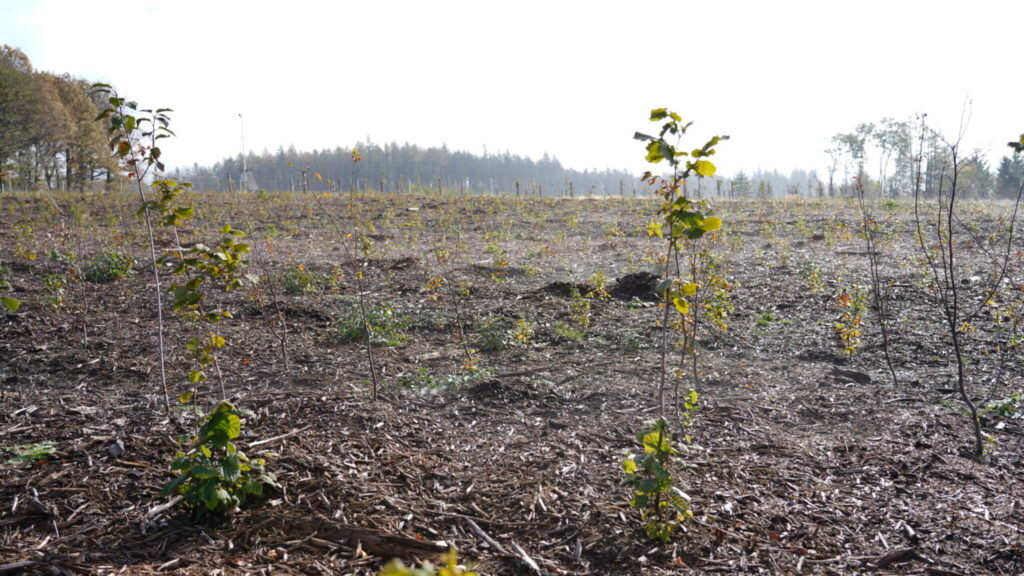
Last year, Greenfield donated €50,000 to social and environmental causes, split between three organizations. Since our founding in 2018, social and environmental commitment has been firmly anchored in our corporate values. We believe that companies bear a responsibility for the world around them and can have a positive impact on their communities. The year 2023 was marked by joyful events, successes, and bright spots — but unfortunately, for many, also by strokes of fate, grief, and tragedy. With this, we want to make our contribution and have a positive impact on our society.
SOS Children’s Villages: Giving Children a Future
Greenfield supports SOS Children’s Villages, an organization that has been working worldwide for decades for the wellbeing of children. SOS Children’s Villages provide loving families for abandoned and orphaned children, enable education and healthcare, and thereby create a foundation for a positive future. Their work spans numerous countries, where they sustainably improve children’s lives. With our donation, we want to help SOS Children’s Villages continue their socially valuable work.
Hilfe für psychisch Kranke e.V.: Support in Difficult Times
Greenfield supports the association “Hilfe für psychisch Kranke e.V.” (Help for People with Mental Illness), based in Bonn. The association provides those affected with professional crisis support 24 hours a day, every day. It advocates for expanding preventive and follow-up care for people with mental illness and disabilities within local communities and helps many of those affected return to the job market in the long term. Supporting people in difficult situations is close to our hearts. We’re glad that our donation can help provide acute emergency assistance as well as long-term support with housing, employment, and work situations — for a happy, self-determined life.
PLANT-MY-TREE: For a Greener Future
Our third donation initiative supports the German PLANT-MY-TREE Foundation, which is dedicated not only to planting new trees but also to preserving natural areas worth protecting. Forests, moors, and special meadows play a hugely important role in climate and environmental protection, and PLANT-MY-TREE actively campaigns for their preservation. In doing so, the foundation creates, expands, and protects vital habitats for plants, insects, and animals. Our donation benefits, in equal parts, the planting of new trees on the foundation’s own land in Lüdenscheid and the protection of natural areas in Germany.
Together for a Better Future
You can find further information on the work, impact, and donation options of the supported organizations here:
On March 8, 2023, International Women’s Day will once again be celebrated! Since 1911, it has been marked worldwide as a reminder — and as a protest — that equality between men and women is still not a given. We should all commit to uncovering and reducing gender-based discrimination. This year, International Women’s Day carries the motto: “Anyone looking for skilled professionals cannot afford to overlook women!”. But is that true? We asked our founder.

“Given the crises of our time, it’s no surprise that topics such as equality between people in society and in professional life — regardless of their gender identity and the stigmas attached to it — tend to fade into the background. On International Women’s Day, however, we take the opportunity to draw attention to exactly that. For this occasion, we asked our co-founder, Nelli Enns, for an interview.
I hope you enjoy reading it!”, Annika Schneider (Greenfield Marketing Specialist)
Tell us about your female power in the IT business!
Our company stands for enduring values: professionalism, honesty, reliability, and ingenuity. We love designing new solutions, whether for individual client projects or for topics within our own organization. Our name “Greenfield” reflects our entrepreneurial spirit and individuality. Personally, I place great importance on healthy relationships with our clients, partners, and, above all, within our own company. But “Greenfield” also means taking risks and not letting adverse circumstances discourage you.
Is there a female role model in your life who has particularly inspired you?
Probably my friend and mentor, who passed away several years ago. She taught me not to let conflicts simply rest, but to actively address the situation and look for compromises. The right path is unfortunately never easy, but it’s worth it! Another example is my mother. She didn’t want us to feel too sorry for ourselves in difficult situations and always encouraged us to look ahead and take risks. Today, I try to pass this on to our employees as well, regardless of gender.
Have you had negative experiences or faced obstacles because of your gender?
I can’t readily recall any. There have certainly been situations that any woman would find inappropriate or uncomfortable. However, these situations haven’t left a lasting impression on me. At this point, I would recommend that every woman express herself very clearly and set boundaries whenever a situation feels in any way “off”.
What do you think of this year’s motto — should women, as potential skilled professionals, really be given more focus?
We’re living in turbulent times with many social and economic challenges, such as political unrest, climate change, and the energy crisis. At the same time, more and more skilled professionals have been needed across all industries for years now. That hasn’t changed even after the pandemic! Part of the reason is certainly demographic change and its consequences. But it may also be because barriers for employable women, for example, still need to be further reduced so they can enter, remain in, or return to the workforce. This group of employees continues to offer immense potential that we should — and want to — make use of.
How does Greenfield support its female employees?
We see ourselves as a team! That also means that every service Greenfield provides to its clients — even the smallest work package — is never the work of a single individual; it’s always a collective achievement. That’s why it’s especially important for us to rely on highly motivated specialists and team players: people who see themselves as entrepreneurs, want to try new things, and are willing to take on responsibility, completely regardless of an applicant’s gender identity. What counts are soft and hard skills as well as the right mindset — nothing else. Socio-cultural diversity and tolerance are of the utmost importance to us!
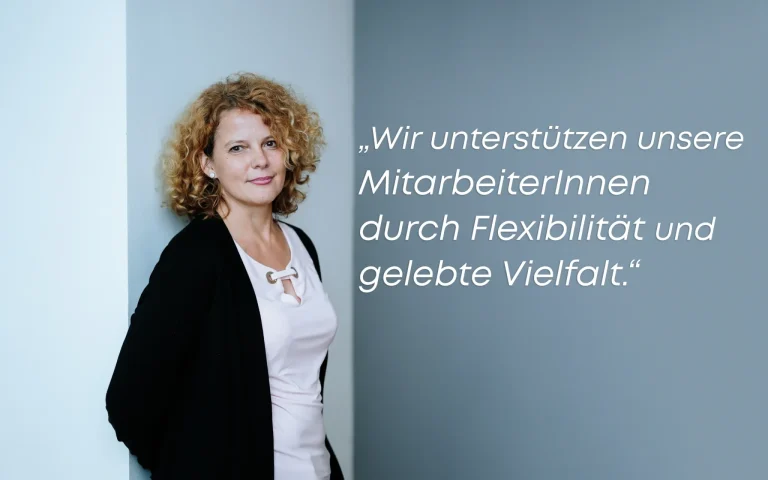
We’re also well aware of the typical hurdles faced by female applicants, and we’re actively working to overcome them together with them. Among other things, we offer flexible working hours that can be adjusted according to each person’s current life situation. For example, mothers can return to work with reduced hours after parental leave. With us, a genuine work-life balance becomes possible rather than remaining just wishful thinking. Our remote working concept also creates additional freedom and flexibility in everyday life and guarantees no wasted time commuting back and forth between the workplace and home.
What’s more, we’re a secure employer with steady growth! We pass this success on. Our prospective employees can count on regular bonus payments and a permanent employment contract. This way, we make sure that you can plan your future with us.

Our female power at Greenfield for a strong presence with clients, March 8, 2023
Become part of our team! Click here to visit our careers page and see our current openings.
Leaner business processes and a more agile approach, who doesn’t want that? How does hyperautomation factor into this, and what exactly does this term actually mean? What benefits might the latest developments in the software industry bring to your company?
What you’ll find in this article:
Many companies rely on software for intelligent automation (also known as Intelligent Process Automation, or IPA for short) to achieve their ambitious business goals this year as well. According to a recent “State of AI” study by Deloitte, 79% of respondents have deployed intelligent software in at least three applications, and 94% are convinced that IPA will be of decisive importance for business success.1
The hyperautomation approach goes a step further still. It describes the concept of automating as many individual process segments as possible. This means the focus is no longer solely on supportive measures. Rather, human work steps are replaced by machine-driven processes wherever this is possible for the purposes of automation. In doing so, numerous software solutions in the fields of machine learning (ML), artificial intelligence (AI), robotic process automation (RPA), and intelligent business process management suites (iBPMS, also known as BPM systems) are combined and, where appropriate, integrated.2
For the sake of efficiency, the potential for hyperautomation can already be factored in when planning processes and workflows. But it also plays a decisive role later on, during execution and monitoring. To identify the potential for automating processes in the first place, methods such as process mining are used. Here, companies gather data from a wide variety of sources, such as ERP, CRM, or other systems, in order to visualize and analyze business processes. Among other things, this is meant to uncover weaknesses such as data discrepancies, bottlenecks, or inefficiencies. The conclusions drawn from the data can in turn be used to identify patterns and pinpoint opportunities for automation.3
For example, if your customers want to get in touch with you, they will typically use a digital form to do so. Here, the request is specified in more detail by the customer themselves, who may also already provide categorizations or similar details. Depending on how well the customer’s input and the narrowing down of the topic succeed, the information can be forwarded to the relevant department and the next steps can be tackled.
If the problem description is incorrect or incomplete, however, processing of the customer inquiry can stall, among other things because the wrong responsibilities are taken into account. If intelligent software solutions are incorporated instead, task assignment (aka routing) can be refined or supported, and effort can be reduced.
In this context, companies can make use of the capabilities of Pega Process AI. In this BPM system, the information provided by the customer can be analyzed and interpreted using Natural Language Processing (NLP), making it usable for employees and their decision-making.4
“It is not the strongest of the species that survives, nor the most intelligent, but the one most responsive to change.”, Charles Darwin, 1809-1882.
With this, he was speaking precisely to what is of fundamental importance in today’s business environment. Economic conditions are constantly changing and becoming ever more demanding. Our own ability to adapt to changing circumstances is therefore one of the key success factors for growth and a secure future for the company. In doing so, personnel challenges such as the shortage of skilled workers or the need for suitable processes and tools for remote collaboration must be mastered, without losing sight of the customer interface. After all, customers are changing too and becoming increasingly digitally savvy. They expect fast responses, straightforward and unbureaucratic processing, an online customer portal, and other offerings that help ensure that contact with the company creates a positive customer experience.
If companies don’t want to lose touch with their customers, they need to act accordingly innovatively. It is therefore necessary to implement adjustments to the use of hyperautomation for a more customer-oriented presence and the handling of business processes.
Besides the NLP approach already mentioned, AI-based process automation also offers predictive and adaptive models for optimal adaptation. As already mentioned, conclusions can be drawn and forecasts made based on the available data and its patterns. Predictive models use exactly this to optimize business processes and make them more efficient.
For example, if customers submit a loan application, such predictive models can be incorporated into the creditworthiness assessment. Based on historical data, the model would, for instance, make predictions about possible loan defaults and, depending on the forecast, forward the application to a case handler for additional review.
Adaptive models aim to build and maintain a certain degree of adaptability and flexibility in processes. Unlike the predictive approach, data is analyzed in real time and the results are fed directly back into the system. The software thus learns live from customer behavior and continuously optimizes itself. Building on this, fast responses to changing customer trends become possible, and the efficiency of the system is improved.
As the market leader in digital process automation software, Pega sets itself apart from competitors with its Process AI, primarily through the integration of predictive and adaptive models into its process management.5
The Pega solution is based on agile low-code platforms. This environment enables software development using visual and graphic tools instead of text-based programming languages. This means adjustments can be implemented faster and more cost-effectively.
So you can build a bridge between your current challenges and the efficiency and cost targets you’re aiming for! As one of the leading implementation partners in Germany, at Greenfield we have relied on Pega’s innovative software solutions for over 10 years. Based on comprehensive case management, the Pega Process AI platform combines the use of intelligent automation (IA), centralized artificial intelligence (AI), hybrid robotic process automation (RPA), and low-code software development.6
“This is how you close the gap between your data and the customer experience you’re aiming for.” Pega, 20204
Read here to learn more about how you can optimize your processes with us and future-proof your company.
Sources:
1 IDC (2022): IDC Studie: 70 Prozent deutscher Unternehmen setzen künftig auf intelligente Prozessautomatisierung, KI ist entscheidender Enabler. Retrieved on 27.02.2023, from: https://www.idc.com/getdoc.jsp?containerId=prEUR149220822
2 Vogel Communications Group GmbH & Co. KG: So viele Unternehmen nutzen bereits intelligente Automation. Retrieved on 27.02.2023, from: https://www.elektrotechnik.vogel.de/so-viele-unternehmen-nutzen-bereits-intelligente-automation-a-d69ba2747ca5fd9a074867b8f54ed626/#:~:text=Spitzenreiter%20sind%20dabei%20IT%2DAbteilungen,oder%20Natural%20Language%20Processing%20kombiniert
3 Frisch, Jürgen (2022): Process Mining führt Automatisierung zum Erfolg. Retrieved on 27.02.2023, from: https://news.it-matchmaker.com/process-mining-fuehrt-automatisierung-zum-erfolg/
4 Pegasystems Inc. (2023): Put NLP text analysis to the test. Retrieved on 27.02.2023, from: https://www.pega.com/products/platform/nlp-text-analyzer
5 Pegasystems Inc. (2023): Funktionen für intelligente Automatisierung in der Pega-Plattform. Retrieved on 27.02.2023, from: https://www.pega.com/de/products/platform/intelligent-automation
6 Pegasystems Inc. (2020): PEGA Leistungsfähiger. Schlanker. Agiler. Retrieved on 27.02.2023, from: https://www.pega.com/de/be-stronger-leaner-more-agile
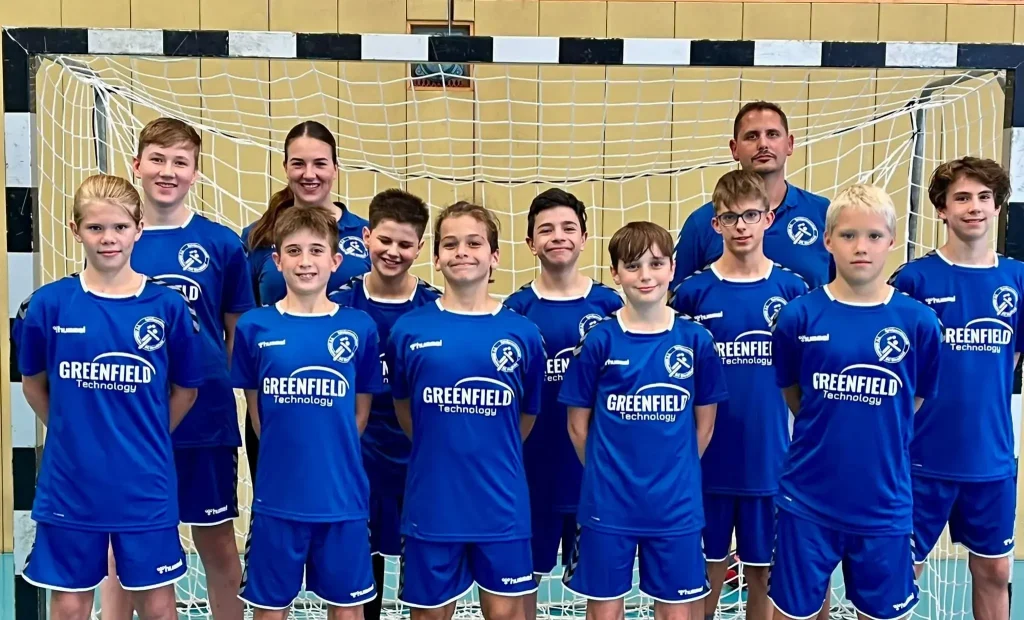
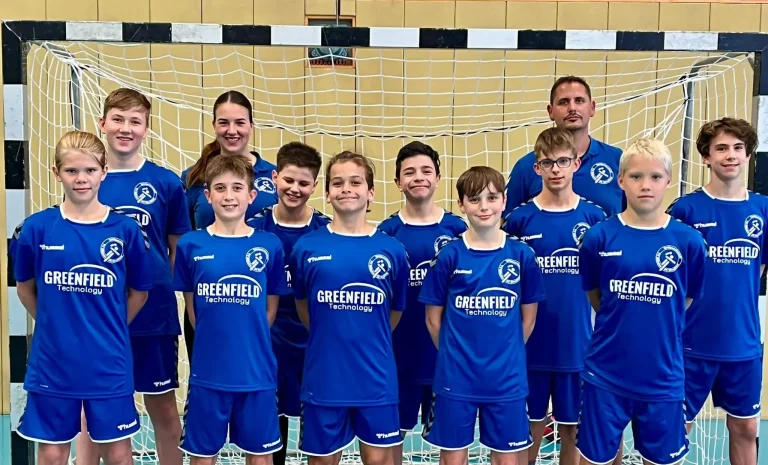
Like many other sports clubs across Germany, SG Ollheim-Strassfeld also suffered from the economic effects of the pandemic. To ensure that the club from Swisttal can continue to offer young people this important and sustainable balance to everyday stress, Greenfield is supporting the C and D handball teams with new kits. From now on, the boys and girls of SG will take to the field for new matches together with Greenfield Technology!
Located in the Rhein-Sieg district, SG Ollheim-Strassfeld has around 400 members and, alongside its large handball division with a total of 11 children’s, youth, and adult teams, offers a wide range of other sporting activities for young and old alike. The club also places great value on community spirit, and in addition to its big carnival event, holds an annual Christmas party, regular get-togethers, outings, and team trips.
As a company with employees working from home all across Germany, it is immensely important to us not just to preach corporate social responsibility, but above all to live it. For many children and young people, sport is the ideal counterbalance to a stressful school routine and a place to experience team spirit and learn to rely on one another. That’s why we’re delighted to support SG Ollheim-Strassfeld in continuing and further expanding its club work in the future. We wish both teams and the rest of SG every success and are already looking forward to the next matches!
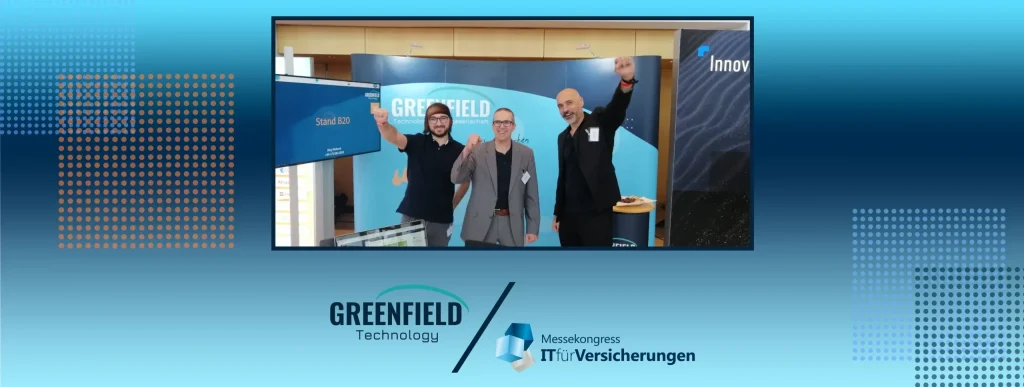
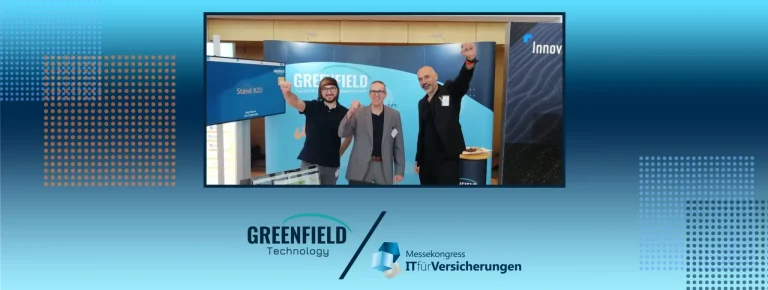
The leading marketplace for IT executives in the insurance industry is entering its next round! On November 29 and 30, 2022, Versicherungsforen Leipzig once again invites attendees to the annual IT for Insurance Trade Congress!
We are delighted to be exhibiting this year, bringing along numerous exciting topics and demos to give our customers and other interested parties a hands-on experience of the benefits of digitalization with Pega.
At our booth, you’ll learn what makes Pega’s low-code platform the optimal digitalization solution for your existing systems. A few highlights in advance:
Next Best Action
How can I always determine the optimal course of action and individual offers for my customers in real time, using historical data and artificial intelligence, and grow my own business as a result? Pega’s proven AI technology uses predictive analytics and machine learning to calculate the next best steps for every interaction.
Low-Code
Unlike classic text-based programming languages, within the Pega platform you design process flows using a functional selection of components, templates, and design best practices. This not only saves time and costs but also quickly lowers knowledge barriers and fosters collaboration. Be convinced by a 360-degree customer view and discover that adjustments or changes to the platform can be made without major effort.
Digital Sales
How can I automatically transfer prospect data into my sales systems and generate the documents required for the further sales process (e.g., as a PDF)? How do I create personalized links or obtain consent declarations from my customers online?
Together with DAK-Gesundheit, our team will present an exclusive live pitch on digital customer acquisition with Pega. See real-world examples of how the Pega platform and the products built on it create effective, time-saving insurance solutions.
Integration into Existing Systems
Probably the most important aspect: How can I use my existing legacy systems without having to adapt them from the ground up? The Pega platform already comes with many standard connections built in, enabling straightforward integration with existing IT systems or applications such as SAP or DMS solutions, as well as use in the web & cloud.
Our Pega experts Lars Ackermann, Jörg Ribbeck, and Joshua Pees will be happy to advise you on-site at the trade congress about the benefits of the Pega platform and individual solutions for your company, and will answer any further questions. You can read more about our experts at the MKIT below.
We look forward to seeing you in Leipzig. You’ll find all the details about our booth location at the MKIT and our pitch together with DAK-Gesundheit on LinkedIn over the coming days!
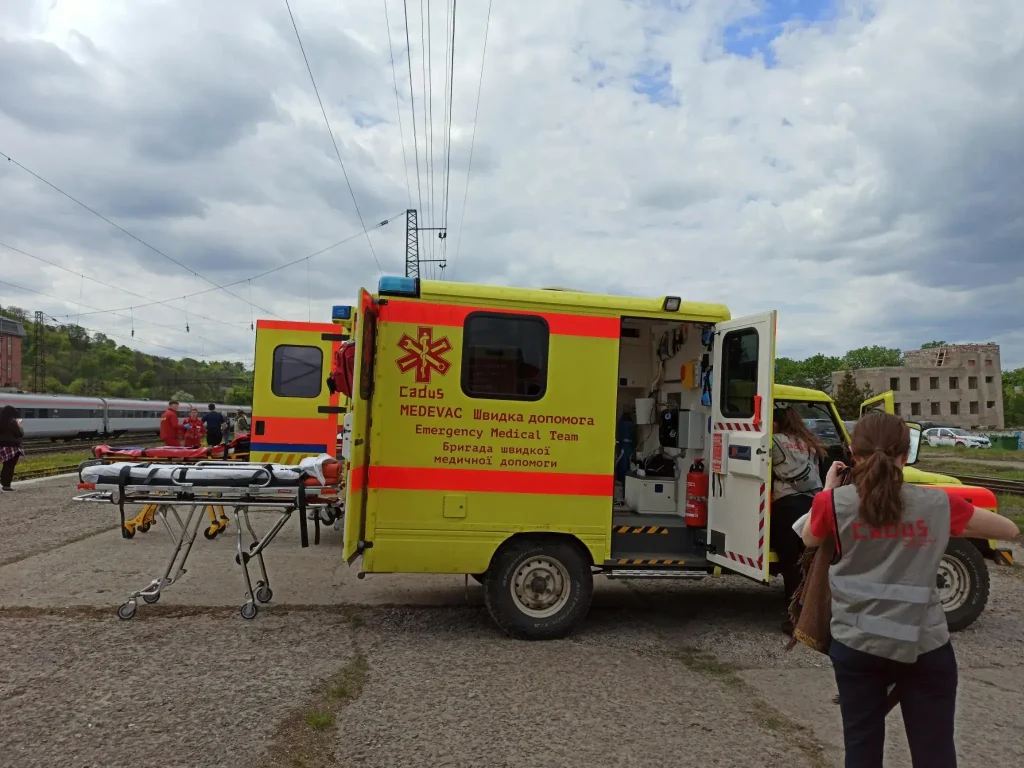
The war of aggression against Ukraine has now been going on for 5 months. According to the UN, more than 7.7 million Ukrainians have so far left their home country, while 2.6 million have already returned to Ukraine. To protect people on the ground and provide help to those affected, the work and support of aid organizations remains essential.
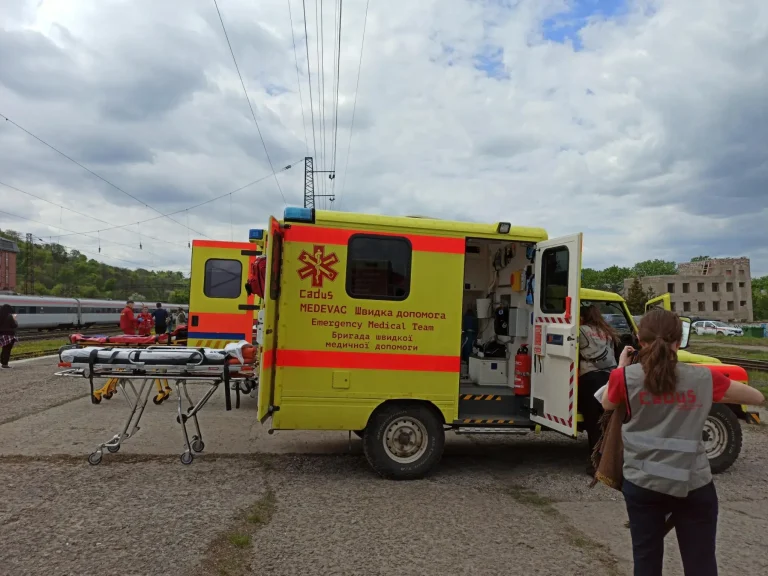
CADUS is a non-profit, independent aid organization that has been providing emergency medical relief from Berlin and on the ground in Ukraine since the start of the war. Together with Greenpeace, CADUS has so far organized 3 aid shipments, including medical equipment for wound care and general medical supplies, among other things.
With the help of Emergency Medical Teams (EMTs), CADUS assists in evacuating patients who require ongoing medical care. They are transported in specially equipped ambulances from endangered areas to safe hospitals in western Ukraine and in Poland.
CADUS also pools resources with EMTs from other countries and carries out joint operations to build reliable structures for the future. The aid organization works tirelessly to use donations to bring further vehicles and teams into operation on the ground.
To equip further ambulances as intensive-care transport vehicles, Greenfield is donating €30,000 to CADUS. Specifically, our donation enables the purchase of specialized equipment such as syringe infusion pumps, suction pumps for bodily fluids, and several electric stretchers that make transporting patients easier. The remaining amount goes entirely toward CADUS’s administrative costs (office rent, personnel costs, etc.) as well as the organization of further relief efforts.
Finally, we would like to take this opportunity to thank CADUS and all the other aid organizations for their tireless efforts, who have been providing emergency relief on the ground continuously for months now – and, not to be forgotten, everyone who supports those affected within their own means.
More information about CADUS’s work and donation options can be found here.
In 2019, University Hospital Bonn (UKB) decided to digitalize its HR processes as extensively as possible. Based on Pega’s low-code platform, 7 HR processes have been implemented to date.
Throughput and processing times were significantly reduced as a result, by up to 60%. In addition, the time-consuming status inquiries of the past are no longer needed, and sources of error in the application processes are eliminated. This takes a huge burden off employees.
UKB achieved another major effect primarily in paper savings, which brings not only economic but of course also ecological benefits. Several tens of thousands of sheets of paper can be saved per year as a result.
Some time has passed since the solution was introduced based on version 8.2.2, and Pega has since released new software versions. UKB wanted to benefit from these in its further project work as well and carried out a Pega upgrade project in May 2022.
Thanks to a carefully coordinated schedule, Greenfield AG carried out the upgrade of the various Pega environments (development, test, production) to the latest version 8.7.1 within just 10 working days.
The three environments were switched over in a staggered sequence. This approach minimized several risks, including platform downtime. The hospital’s day-to-day operations continued almost as usual throughout the upgrade project.
Sarah Nieden, project manager at UKB:
“As always, Greenfield’s team supported us in carrying out the upgrade to the latest Pega version in their tried-and-tested way, updating our 3 work environments to the new version. This means we can now carry out our further planned optimizations more cost-effectively and quickly, using the latest version of Pega.”
Read more here about the digitalization of University Hospital Bonn.
For the latest information about Pega and Greenfield Technology, follow us here on LinkedIn!

Long lines at the vehicle registration office? Endless phone loops? Or perhaps simply filing your tax return?
Every day, millions of transactions take place worldwide across local, regional, and national public administrations, with varying quality in customer or citizen service. Some agencies, such as the Swedish Public Employment Service or the U.S. Census Bureau, already offer straightforward citizen services via mobile devices and modern applications today.
The German government also adopted its “Digital Administration 2020” program back in 2014. But we are still far from reaching that goal. The media in particular voiced massive criticism that – especially during the pandemic – public health offices were still working primarily with phone and fax
The shift toward better customer service in public administrations is being driven by citizens’ steadily rising expectations. Private companies such as Amazon have already made simple, intuitive, and transparent interactions the standard for customer service.
They orient themselves around the customer and their customer journey – not around internal guidelines or outdated procedures. Interactions are dynamic and follow user behavior. Information is simple and accessible everywhere. Mobile devices are being used more and more, and citizens expect public authorities to be reachable (also) through this channel.
So far, German public administrations have often lacked the technology, the funding, and frequently even the authority’s own willingness to change fundamentally. At first glance, digitalization in the public sector often seems like a massive undertaking. But today there are both approaches and technologies that enable a step-by-step process, delivering benefits and efficiency gains very quickly.
Whether an authority is already in the middle of modernization or has not yet begun its digital transformation, it is capable of offering customer-oriented service and creating outstanding citizen service with an agile platform. This leads to continuous improvements in accessibility, reliability, timeliness, and accuracy.
Start with your most urgent needs, then close the gaps between legacy systems and current applications to provide citizens with a seamless service:
Read here what the implementation of an intelligent platform achieves in practice, using the example of the Bavarian State Ministry.
For the latest information about Pega and Greenfield Technology, follow us here on LinkedIn!

Customer engagement forms the first of the 3 pillars of digitalization. It’s about building, nurturing, and deepening customer relationships. It’s about the ability to meet customers optimally on every sales channel, capture sentiment in real time, and respond to emotions, motivations, and behavior. Effective customer engagement ultimately drives sales.
You can support your customer engagement through the pragmatic use of AI technology. Tools from decisioning, natural language processing, and text analytics let you personalize one-to-one contact with customers and their interactions.
Process efficiency. This simply means working through your own systems more effectively and flexibly. Redesigning workflows so that you can respond to changing business processes in real time and scale operations.
When it comes to your own systems, automation is the keyword. Tools from robotic automation, for example, allow companies to remove blockages and „bottlenecks“ from processes, so that more employees can focus on the tasks that truly create value.
Agility is probably the most important of the pillars of digitalization. The ability to respond at any time and to evolve your own systems in step with, and in support of, digital transformation is essential.
Agility is determined by the software you code. Months-long „waterfall“ projects? Today, it’s far more efficient to use software in which users simply arrange system workflows visually, rather than laboriously coding them. Visual models are created faster with the help of low-code platforms and can be changed at any time. They foster collaboration, boost productivity, save costs, and significantly improve time-to-market.
An industry-wide unique low-code platform is offered by the Pega platform. For over 35 years, Pega has been helping leading brands around the world achieve breakthrough results, relying on artificial intelligence and robotic automation. Independent industry analysts such as Gartner and Forrester repeatedly award Pega top marks.
As Greenfield Technology, we’re proud to be one of the leading German implementation partners for Pega products, helping our clients every day to optimally equip their corporate structures for the digital age.
Learn more here about industry-specific information on the Pega platform and how we can help you achieve your digital goals.
Also follow us on LinkedIn and stay up to date!
A model-driven application platform is one of the most effective ways to digitally support complex business transactions and processes. This is especially true when variations need to be reflected in workflows – whether due to regulatory requirements or simply because of different use cases depending on business type or regional specifics. The model-based principle allows pre-built functional building blocks to be configured according to individual needs.
This isn’t just about mapping end-to-end processes within a company once, or increasingly across company boundaries toward ecosystems. It’s also about ensuring that complexity and the sheer variety of variants remain manageable in ongoing business operations.
In connection with the model-based principle, technologies and methods are used that today are commonly associated with low-code platforms. Low-code simply means that, in contrast to classic text-based programming languages, process flows are configured using a visual design.
For me, the interplay between process logic and rule sets is at the forefront here, enriched with AI systems and machine learning for system-supported decisions and automation. Not as an end in itself for IT, but as a value driver for the business, and to optimize experience management with a focus on employees, business partners, and of course customers.
Model-driven application development and low-code platforms are nothing new – some software vendors have been offering mature technologies in this space for quite some time already. Well-known market analysts such as Gartner and Forrester have long rated Pegasystems as a leading provider in this field.
Today, enterprise customers expect solutions enriched with preconfigured business logic in the form of components or (micro)services that support cloud-oriented architecture principles. When introducing such solutions – especially when integrating them into existing environments – and following an iterative, incremental approach, a great deal depends on the consulting and delivery expertise of the executing or supporting service provider. This is an area where Greenfield Technology AG has already proven itself successfully across numerous implementation projects.
This young, owner-managed company sets itself apart from others through its exclusive focus on Pega technology and a truly distinctive company culture. The enthusiasm and many years of experience of the founding team are the cornerstones of the company’s continued strong growth, both in business and in building its team of highly specialized consultants.
The employees aren’t just industry specialists, business and IT architects, and certified Pega technology experts. Above all, they’re a tight-knit team of digital-minded thinkers, listeners and observers, forward and lateral thinkers, idea generators, and innovation artists. This is how they create collaboration with their clients on an equal footing.
I myself have had the pleasure of accompanying Greenfield Technology on its journey to success as a member of the supervisory board for four years now. From day one, they’ve been prudent business people with a mission and a clear corporate vision. This professionalism has allowed them to navigate the turbulent pandemic period and has helped them to continuously expand their business areas.
Today, Greenfield Technology has two locations, in Germany and in Poland, to deliver client projects using onshore and nearshore delivery models and to continue scaling through existing partnerships.
Successful projects and in-house efforts have produced functional business artifacts that are reused as project accelerators. Whenever desired, client employees receive the necessary Pega toolset through the Greenfield Academy, enabling them to operate and further develop new processes and applications independently.
All in all, Greenfield Technology has developed a successful model for a highly demanding field of activity, in which companies mostly need to implement business-critical processes and use cases. This requires a thoroughly solid and reliable Pega partner for long-lasting business relationships and sustainable project and business success.
If you’d like to find out whether your company, too, can benefit from the innovative solutions of PEGA technology, simply click here – we’d be happy to advise you on individual solutions.
For more news about PEGA, and to learn more about how we help companies digitalize and streamline their business processes, feel free to follow us on LinkedIn.
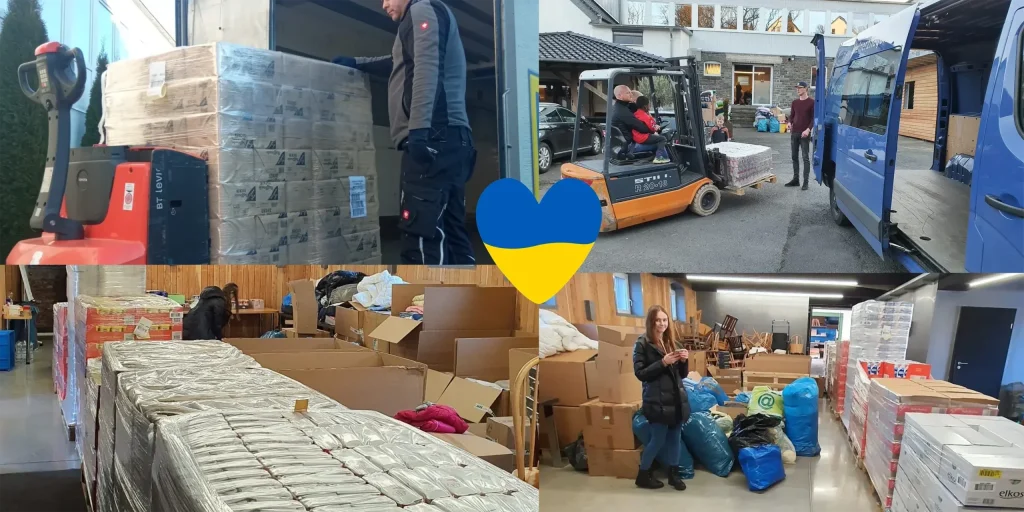
The war in Ukraine has so far forced more than 3 million people to flee their home country, with many more seeking safety within the country. In order to continue ensuring people’s supply needs are met, regular supply deliveries are necessary.
The full sum of 30,000 euros benefits FECG Meinerzhagen, a Christian congregation in the Sauerland region that organized convoys of aid packages to affected areas within Ukraine, as well as to refugee camps along the Ukrainian border, right from the start of the crisis. Many of its members have roots and family in Ukraine and are working tirelessly to provide further emergency relief to those affected on the ground.
The congregation organizes four types of aid packages: food, medicine, hygiene, and baby supplies. With the help of our donation, those responsible are able to procure further urgently needed food packages and send them to the affected areas as quickly as possible. We’re delighted that many Greenfield employees are also taking part in the initiative through donations of goods and money!
Lastly, if you would also like to take part in donating for Ukraine, we’d like to point you toward the fundraising campaign by Kirche für Oberberg e.V. This Christian community has been engaged in humanitarian work in Ukraine since 2014, supporting the rebuilding of homes as well as the establishment of children’s camps and youth cafés. The congregation currently has aid workers on the ground, supporting local people with relief supplies funded by donations. As a result, 100% of the donations raised go directly toward relief efforts in war-affected areas of Ukraine.
Kirche für Oberberg e.V.
IBAN: DE68 3846 2135 7415 4720 18
BIC: GENODED1WIL
Reference: P800010, Ukraine, name and address
Or via PayPal:
https://www.paypal.com/donate/?hosted_button_id=WEZL76DDR8F72

Comprehensive digital support on the channel of choice, a fast, case-closing solution to every query, and all of that 24 hours a day? These are just some of the expectations that modern customers have of an insurance company.
But from an insurer’s perspective, this is often not so simple. Employees aren’t available around the clock, brokers tend to operate independently, and on top of that, legacy systems are frequently in use that are not connected to one another, or only partially so.
Processing a single business transaction therefore often means using several different systems at once and manually transferring data from one application to another. In the worst case, this is even a „standard process“ that is carried out accordingly often.
In the past, attempts at streamlining often came at the customer’s expense. Today, however, we have technologies available that keep the customer at the center.
Modern solutions mean this dilemma doesn’t even have to arise in the first place. Instead, there are now ways to expand, connect, and even automate existing structures, delivering noticeable improvements within a short time. This not only gives customers the added value they’re looking for, but also relieves the burden on employees and brokers at the same time.
Two key components play a decisive role here: the implementation of bots, and the use of low-code technology. Ideally, both areas even come from the same toolkit.
Through the use of RPA (Robotic Process Automation), standard tasks or pure „copy & paste“ activities can be taken over by bots.
For example, a simple chat conversation could in future be handled by a bot around the clock. In the best case, the request can be resolved completely by the bot. If that isn’t possible, however, the entire conversation history can be handed over to an employee effortlessly and within seconds, allowing for seamless continued handling.
This not only saves valuable resources, but also guarantees the customer round-the-clock availability without having to forgo personal contact, should that be desired. Further opportunities for digitalization lie in fields such as machine learning, artificial intelligence, and speech recognition.
Through efficient implementation of „cutting-edge“ innovation, insurance companies continue to be the trusted partner customers are happy to rely on, one that is only the push of a button away, even in a crisis.
Using a real-life example, we’ll show you how you can optimize a typical operational process in everyday insurance business.
Imagine the following scenario:
Your customer has had a car accident. On top of everything else that now needs to be dealt with, they also have to take care of the claim.
But instead of tedious phone calls and paperwork, they now record the claim directly and digitally via an app or the portal. The claims history, current coverage, and a comparison with similar claims are then automatically analyzed.
The resulting score determines whether the claim is automatically approved, forwarded to a claims handler, or rejected.
If approved, further information is automatically provided (e.g., the nearest repair shop) and an appointment is proposed.
At the same time, the selected repair shop is informed about the claim and can make its own preparations. After the repair, the invoice is transmitted electronically to the insurer.
This triggers the next actions (e.g., instructing payment to the repair shop, a notification letter to the customer, automatically scheduling a care call).
The care call is automatically initiated with the customer at a later point, and feedback can be collected. In addition, a personalized offer for additional insurance services or adjustments can easily be made. The feedback gathered can be used for future adjustments to the service.
A prerequisite for such a holistic approach is that the necessary systems are linked together in the background. Low-code platforms, such as the PEGA platform, already offer the ability to map out the customer journey just described within the system.
PEGA establishes the connection between the contact channels (phone, chat, web portal, social media) and the sometimes disparate backend systems. You design the journey quite simply within the platform, for which no software programming whatsoever is required. Instead, the process is modeled using a visual interface.
With „standard connectors,“ you establish the connection to the systems of record and only need to configure them.
If human interaction is required, employees, customers, or brokers have access to all relevant information in a single system and can be guided through the process.
Without any additional effort, you can also use the PEGA platform to provide an app that ensures a seamless connection.
If you’d like to find out whether your company, too, can benefit from the innovative solutions of the PEGA platform, simply click here — I’d be happy to advise you on individual solutions.
For more news about PEGA, and to learn more about how we help companies digitalize and streamline their business processes, feel free to follow us on LinkedIn.

Some of the founders of Greenfield Technology Aktiengesellschaft live in the immediate vicinity, without having been directly affected by the floods themselves. As part of our Corporate Social Responsibility (CSR) efforts, we have decided to donate a total of 30,000 euros to the city of Erftstadt, the Ahrweiler district, and the Rhein-Sieg district.
In addition, we would like to call for further donations.
Within our circle of acquaintances, the Neudorf family suffered greatly from the heavy rainfall and flooding. Both hit them with full force and destroyed a large part of their home.
Mäggi and Johann Neudorf have three daughters. Last year, they bought a house with a horse farm, where they rent out stalls for 8 horses. Due to the lightning-fast rise of the floodwater, they were woken in the middle of the night between Wednesday and Thursday, evacuated along with their three young children, and had to leave everything behind. Two days later, once the water had receded, the full extent of the damage could only be guessed at: clothing, furniture, electrical appliances, their car, and the farm buildings were damaged and partly destroyed.
Greenfield employees have already provided direct assistance to the family.
So that a place of togetherness and joy can be rebuilt at the heart of this crisis-stricken area, we would like to warmly invite you to donate.
https://paypal.me/pools/c/8Bhq7XxKE4
or via the To-all-Nations mission:
https://to-all-nations.de/neuigkeiten-details/hilfe-f%C3%BCr-die-betroffenen-der-flut-in-deutschland (with the reference “Flood relief for the Neudorf family, Mäggi and Johann”).
The following interview with Roberta Caldas, Senior System Architect at Greenfield, gives insight into the recipe for success behind girl power at Greenfield.
The Pega concept: Why should women choose it?
The Pega low-code concept fascinated me right from the start. Especially since, until then, I had been at home in a completely different business area. Pega gave me the chance to become a developer and bring the skills I had already acquired along with me. I was able to pick up the new knowledge required for my work in a very short time. And what could I count on along the way? The Pega community, which has always actively supported me! And honestly, Pega technology is also simply easy to learn. Every day, I’m glad all over again to see how far I’ve already come and the opportunities Pega offers me for my further development.
What do you find particularly exciting and interesting about Pega – what appeals to you?
The diverse range of applications for Pega is the main reason I chose Pega over other technologies. It gives me the opportunity to work with frameworks for areas such as BPM, robotics, and data science, for example. That’s the foundation for actively helping shape the future of the IT world and making a positive difference in my environment.

Following last week’s good news about the founding of Greenfield Technology in Poland, today we introduce our CEOs for Poland:
Tim Enns is responsible for the areas of finance and infrastructure as CEO of Greenfield Technology in Poland.
He has many years of experience in corporate organization as well as in infrastructure, operations and maintenance. Tim Enns has built up particular expertise through his work in product development and in solution development within hardware and software.
Pawel Brzeski is responsible as CEO for the areas of organization and marketing, and manages the operational business of Greenfield Technology in Poland.
He holds a Doctor of Philosophy (Ph.D.) in “Integration of IT Systems” and has extensive experience in IT management, having already held various positions as CIO and CEO. The focus of his work is on transformation projects and leading large teams of more than 100 people.

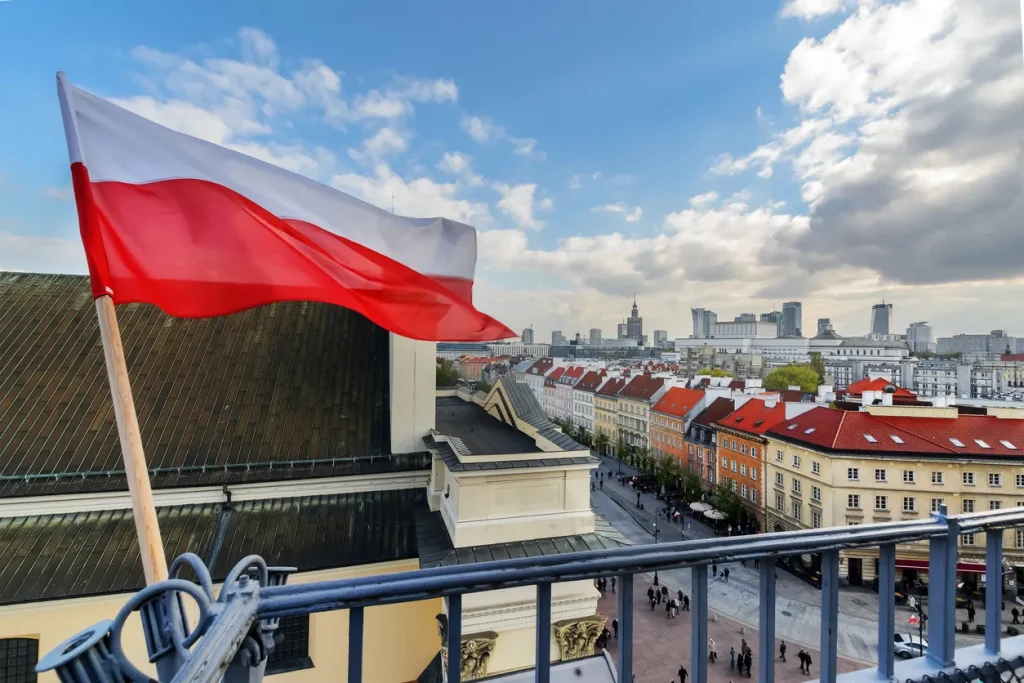
Full of gratitude, we are wrapping up a successful year 2020, and here’s already the next success story: together with the Polish IT experts from Clocklike Minds, Greenfield has founded a new company, Greenfield Technology Sp. z o.o., in Poland (Warsaw), and is now also growing internationally!
With Clocklike Minds, we have found the perfect addition to expand our portfolio, further strengthening our strategic partnerships.
Today, companies need to change in ways that are both immediate and omnipresent. They must respond instantly to the rapidly changing conditions in the economy and in the lives of their customers and employees.
At the same time, they must accelerate the transformation of their organization and build the digital platforms that enable efficiency, agility and impressive customer experiences – now and in the future.
In his keynote, Alan Trefler, founder and CEO of Pega, inspired the audience with a bold new vision of how companies need to adopt a business architecture that drives both immediate improvements and future-proof transformation. Here’s a link to his speech, video link (in English)
Starting at minute 12, the keynote even mentions the project implementation in just 5 days in Bavaria, which Greenfield Technology AG supported:
We have already published several posts on this topic — in total, there were 3 such projects for the Bavarian state ministries.
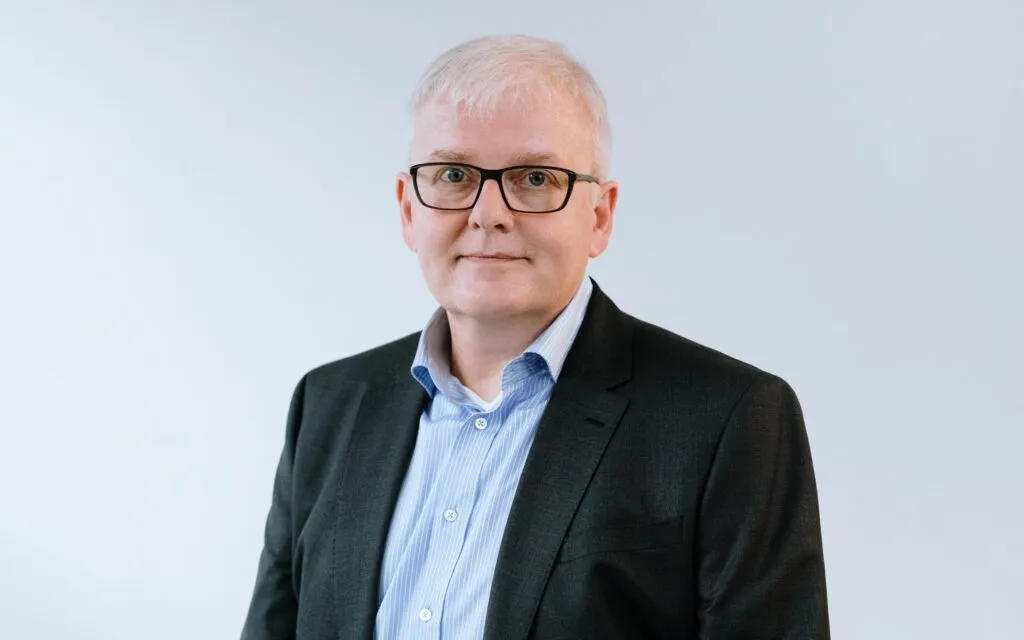
Greenfield Technology Aktiengesellschaft successfully carried out a project at the University Hospital in Bonn. The application went “live” in April 2020.
Mr. Thomas Krück, Lead Business Architect at Greenfield, reports:
In addition to onboarding new employees, this project also covered other processes, such as being able to handle working time changes, changes to fixed-term contracts, transfers, re-funding or changes to pay grading online. As with employee onboarding, the aim was to make the existing processes as paperless as possible and thereby speed up the process. A particular challenge was implementing this in such a way that different activities and specific circumstances — such as third-party funded positions or differing areas of responsibility across multiple staff council bodies — were optimally supported.
Christopher Zauzig (Project Manager at the University Hospital) on working with Greenfield Technology Aktiengesellschaft:
I have always experienced working with Greenfield as professional and consistently positive. The external staff quickly integrated into the existing team. Together, we were able to develop a strong sense of team spirit, which allowed us to overcome obstacles together and get a functioning application up and running on time within a short period. This enables our employees to work from home as well, without any system disruptions!

As part of the Corona emergency aid programs run by the German federal government and the Free State of Bavaria, the Bavarian ministries, working closely with the regional governments, have had to handle a large number of applications. The Bavarian Ministry of Economic Affairs took a strategic approach here, opting for a fully digital solution. As a result, the entire process — from the online form through the decision to the payout — was implemented digitally end-to-end, using a powerful application and process platform. Following the successful go-live at the Bavarian Ministry of Economic Affairs, two further ministries followed with the Corona aid application platforms they were responsible for (see press releases attached). The blueprints and the experience gained in the project for the Ministry of Economic Affairs could be put to good use, making it possible to build a powerful e-government infrastructure for Corona emergency aid in Bavaria in a short time.
The online application process is based on a highly configurable low-code platform from Pegasystems. The specific requirements were gathered, tested and technically implemented by Greenfield Technology Aktiengesellschaft in close coordination with the respective Bavarian state ministries. The processes are operated on a secure, highly available and scalable infrastructure in T-Systems’ German data centers. In particular, the good and highly constructive collaboration between all parties involved made very short project runtimes possible.
Over the past six weeks, 316,000 applications were processed digitally in this way. In addition, the security measures implemented in the systems helped to prevent fraud cases (funds were not paid out) and supported the LKA (Bavarian State Criminal Police Office) in its investigations.
Corona pandemic: Bavarian Ministry of Arts’ artist support program launches
which lead you to the applications:
https://www.stmwi.bayern.de/soforthilfe-corona
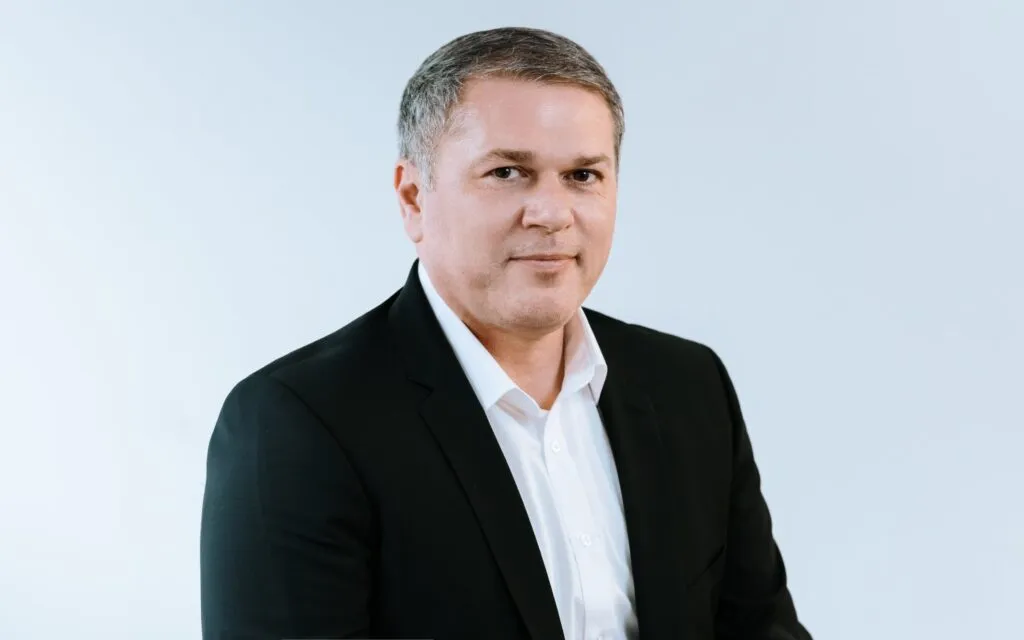
Interview with Ralf Mumper (Senior Business Architect at Greenfield )
What was the project about?
The Corona Emergency Aid project was about providing financial support to companies during the Corona crisis. The goal of the project was to develop an application that would allow applications for Corona emergency aid to be processed as quickly as possible. By eliminating PDF applications, the waiting time between the submission of an application and payout could be reduced to 2 days. Greenfield played a part in the Corona Emergency Aid project.
What challenges were there?
The biggest challenge was the enormous time pressure under which the application had to be developed. Thanks to the tireless commitment of the project team and the customer’s constant willingness to be available for coordination and testing, it was mastered in 5 working days!